Dr. Freya
Digital Health & Wearables Researcher • 7+ Years Exp in Health Tech Analysis
If you’ve spent any time researching wearable health tech lately, chances are the Oura Ring 4 has crossed your radar more than once. It shows up on the fingers of athletes, on health forums, in fertility-tracking communities, and increasingly on the hands of people who just want to know how well they slept without strapping on another screen. But a smart ring that costs several hundred dollars and locks most of its features behind a subscription deserves more than a glance at the marketing copy. This review pulls together real testing data, a peer-reviewed study on its fertility algorithm, and an unfiltered account from a long-term owner to give you a clearer picture of what you’re actually buying.
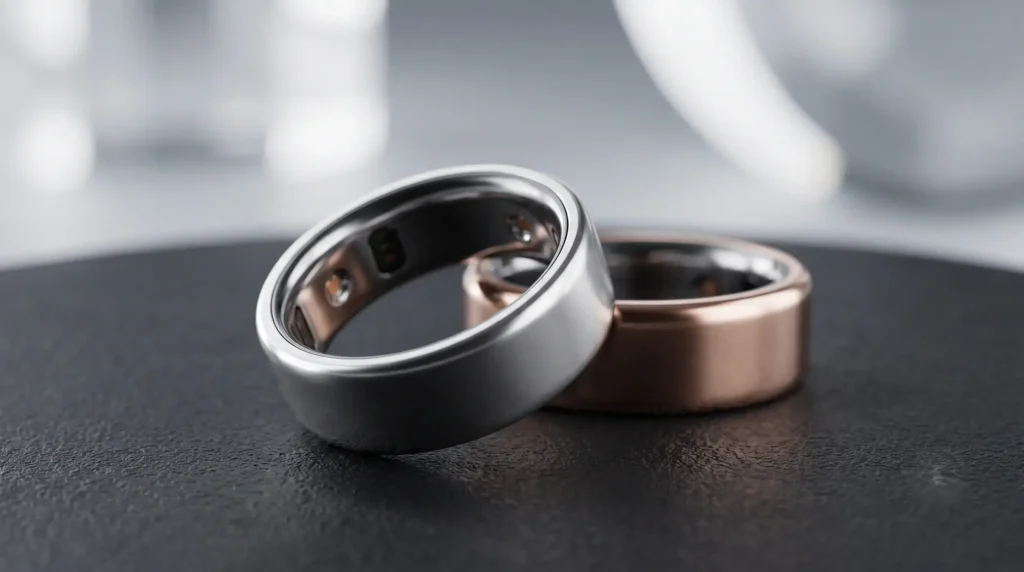
Table of Contents
What Is the Oura Ring 4?
The Oura Ring 4 is the fourth-generation version of the titanium smart ring that helped kick off the entire smart-ring category. Unlike a smartwatch, it doesn’t buzz with notifications or try to be a mini computer on your wrist. Its entire design philosophy centers on passive monitoring — collecting data quietly in the background and turning it into three daily scores: Sleep, Activity, and Readiness.
Under the hood, the ring has expanded its sensor array significantly compared with the Gen 3, jumping from eight sensing pathways to eighteen. That expansion feeds a “smart sensing” algorithm that continuously selects whichever sensor is getting the cleanest signal from your particular finger, skin tone, and blood flow pattern, rather than firing every LED at once. The practical result is a ring that draws less power and produces more consistent readings across a wider range of body types.
Oura Ring Sizing: Get This Right Before You Buy
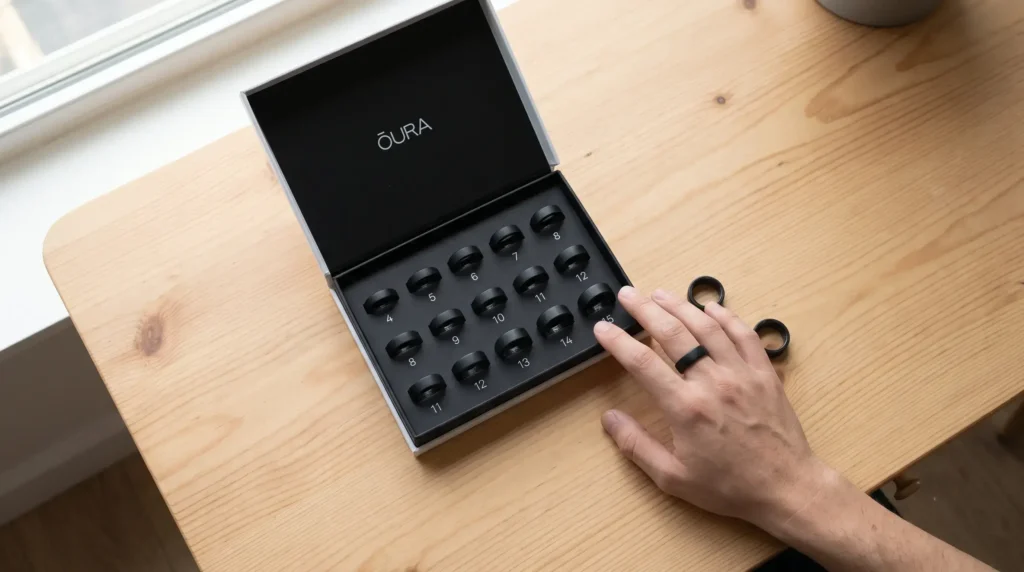
One detail that trips up a lot of first-time buyers is Oura ring sizing. The Oura Ring 4 is sold in sizes 4 through 15, a noticeably wider range than the Gen 3 offered. Because the ring needs continuous skin contact to read your pulse and temperature accurately, an ill-fitting ring doesn’t just feel uncomfortable — it actively hurts your data quality.
The company sells a standalone sizing kit for a modest fee, and that cost typically gets credited toward your final ring purchase. Given that a poor initial fit is one of the most common sources of buyer’s remorse with this product, ordering the sizing kit first is close to a non-negotiable step rather than an optional nicety.
Sleep Tracking: Where the Oura Ring 4 Earns Its Reputation
Ask anyone who has worn both an Oura Ring and a smartwatch overnight, and you’ll usually hear the same thing: the ring wins. As an Oura ring sleep tracker, the device benefits from a fundamental physical advantage — finger-based optical sensors pick up cleaner blood-flow signals with less motion interference than wrist-based sensors do. That translates into sleep staging and heart-rate variability readings that consistently hold up better against clinical-grade equipment.
The ring calculates its Sleep score from total sleep time, sleep efficiency, time spent in REM and deep sleep, how long it takes you to fall asleep, and how restless you are overnight. After about 90 days of consistent wear, the app also determines your personal chronotype and recommends a bedtime and wake window that’s actually realistic for your body, rather than pushing a generic “lights out by 10 p.m.” rule that nobody follows.
Comfort plays a bigger role in this accuracy than people expect. Sleeping in a relatively bulky device like a watch is a compromise most people never fully get used to. A titanium band that fades into the background once you’ve adjusted to wearing it is a different experience entirely, and that comfort is precisely why the sleep data ends up more reliable — people actually keep it on all night, every night.
Readiness, Stress, and the Symptom Radar
The Readiness score is arguably the feature that keeps people opening the app every morning. It blends resting heart rate, HRV trends, skin temperature fluctuations, respiratory rate, recovery index, and the previous day’s activity into a single number that estimates how prepared your body is for the day ahead. Score 85 or above and you’re generally in good shape; dip lower and the app nudges you toward rest, lighter movement, or simply more sleep — without the guilt-trip tone some fitness apps default to.
Built on top of that same data is a Symptom Radar feature, which flags when your biometrics show signs of physical strain before you consciously notice anything is wrong. It’s not a diagnostic tool, and Oura is upfront that it can be thrown off by preexisting conditions that already elevate your baseline readings. Treat it as an early, general signal worth paying attention to — not a substitute for how your body actually feels or for professional medical evaluation.
Oura Ring Fertility Tracking and the Natural Cycles Partnership
Oura ring fertility tracking is one of the more clinically validated corners of what this device does. Rather than a single daily temperature reading, the ring records temperature trends continuously overnight and uses that data to estimate the ovulation date.
A peer-reviewed study published in the Journal of Medical Internet Research analyzed 1,155 ovulatory cycles from 964 participants and compared Oura’s physiology-based algorithm against the traditional calendar method. The physiology method correctly detected ovulation in 96.4% of cycles, with an average error of just 1.26 days — compared with a 3.44-day average error for the calendar method, roughly a threefold improvement in precision. Accuracy held up consistently across different age groups and cycle lengths, though the algorithm did detect slightly fewer ovulations in unusually short cycles and showed a modest accuracy dip in abnormally long ones. A separate clinical study using transvaginal ultrasound as the gold standard similarly found the ring outperformed the calendar method, while ovulation predictor kits remained the single most precise method of the three.
This research underpins Oura Ring with Natural Cycles, a partnership that turns the ring into a hormone-free contraceptive and conception tool. The ring measures your temperature trend overnight and shares that data — along with heart rate and sleep stages — with the Natural Cycles app, which then classifies each day as “green” (not fertile) or “red” (use protection). Natural Cycles is FDA-cleared and CE-marked, and using it with the Oura Ring doesn’t change its stated effectiveness: 93% with typical use and 98% with perfect use. Worth noting is that this is a one-way data relationship — Natural Cycles doesn’t send your period or cycle logs back to the Oura app, so anyone relying on both platforms for a complete picture will likely need to sync manually or through Apple Health.
There’s a real cost consideration here too. The ring and its baseline subscription are separate purchases from the Natural Cycles subscription itself, so anyone building a fertility-tracking stack around this combination is effectively paying for two ongoing services rather than one.
Design, Comfort, and the Subscription Reality
The Oura Ring 4 keeps the understated, wedding-band-like look the brand is known for, offered in finishes ranging from silver and black to gold and rose gold. It’s noticeably more comfortable than earlier generations, in part because of a lighter, smoother build that no longer catches on everyday tasks like gripping a knife or a hairbrush. It’s also water-resistant enough to survive showers and swimming, though most owners still take it off before scrubbing dishes purely out of habit.
The tradeoff shows up during workouts, particularly weight training, where the ring can dig in uncomfortably under a barbell or dumbbell grip. This isn’t a sports watch replacement, and Oura doesn’t pretend otherwise — if GPS-tracked runs and detailed athletic metrics are your priority, a dedicated fitness watch still makes more sense.
Then there’s the subscription. After an initial free month, ongoing access to most of Oura’s meaningful data and long-term trends requires a monthly fee. Without it, the app retains only a few days of history and shows a stripped-down version of your scores. Anyone comparing the sticker price of the ring itself against a smartwatch is missing half the real cost — the subscription needs to be factored in from day one, not treated as an afterthought.
A Real Owner’s Experience: What Three Years of Use Actually Looks Like
Marketing pages and even professional reviews only tell part of the story. Tylor, who purchased a $606.55 rose gold Gen 3 Oura Ring back in October 2022, offers a longer-term perspective that’s harder to come by. After roughly three years of regular use, the ring simply stopped working. Oura’s diagnosis was a dead battery, and the unit was ultimately deemed dead on arrival for repair — with the company’s resolution being a $100 discount toward a new ring.
For Tylor, that didn’t square with the price paid. A premium finish that costs several hundred dollars, largely because of its color, failing after three years — with a token discount as the main remedy — left the experience feeling more disappointing than the glossy unboxing videos suggest. It’s a useful reminder that a smart ring is still a battery-powered electronic device, and like any of them, its lifespan and the manufacturer’s warranty support matter just as much as day-one specs.
Tylor also raised a common frustration with the sleep-tracking accuracy: lying still for extended periods while awake — reading, resting, scrolling on a phone — can register as sleep, since the ring is largely inferring sleep state from stillness and physiological signals rather than direct observation. It’s a limitation echoed elsewhere in independent testing, where reviewers have noted the ring occasionally logs restful downtime, like watching a movie or working at a desk, as a nap. Oura has continued refining its activity-detection algorithms to reduce these misreads, but it’s not yet a solved problem, and it’s worth going in with realistic expectations rather than assuming every green checkmark is gospel.
On the health-monitoring side, some long-term owners describe using the ring as one part of a broader routine for keeping an eye on cardiovascular metrics alongside guidance from their own doctor. That kind of use is worth flagging clearly: the Oura Ring is a consumer wellness device, not a diagnostic or treatment tool, and any decision about medication or managing a heart condition should be made with a physician — not based on ring data alone.
Oura Ring 4 vs. Oura Ring 5: Should You Wait?
Oura has already announced its next-generation ring, a slimmer, lighter model with redesigned sensors, a longer battery life ceiling, and new features including nighttime breathing analysis and blood pressure pattern tracking. Notably, several of these software features are rolling out to Gen 3 and Gen 4 owners as well, so upgrading purely for new capabilities isn’t strictly necessary. Where the newer model pulls ahead is in its thinner profile and expanded health-radar features; where the Oura Ring 4 still has the edge is its wider size range and, following a price adjustment, a lower starting cost than the newest generation.
Final Verdict
The Oura Ring 4 remains one of the most dependable wearables on the market for sleep tracking, recovery insight, and fertility monitoring, backed by genuinely strong clinical data rather than just marketing claims. It’s not trying to be a sports watch, and it shouldn’t be judged as one. But it is a serious financial commitment once you account for the ring’s price, the mandatory subscription, and — as at least one long-term owner has learned the hard way — a battery that may not outlast your loyalty to the brand. If passive, screen-free health tracking genuinely fits how you want to live with your data, the Oura Ring 4 still makes a compelling case. Just go in with clear eyes about the ongoing costs and the device’s real limitations, rather than the polished version alone.
This article is for informational and educational purposes only and is not a substitute for professional medical advice, diagnosis, or treatment. Always consult your doctor or a qualified health provider before starting any new diet, exercise, or wellness routine.
Frequently Asked Questions (FAQS):
Q1. Is it worth getting the Oura Ring 4?
For sleep tracking, recovery insight, and fertility monitoring, the Oura Ring 4 delivers genuinely strong, clinically-backed performance rather than just marketing claims. It’s a serious financial commitment once you factor in the ring’s price and the mandatory subscription, so it’s worth it mainly if passive, screen-free health tracking fits how you want to live with your data.
Q2. Why are people ditching Oura rings?
The biggest complaints center on battery longevity, subscription cost, and sleep-tracking accuracy — one long-term owner’s ring died after roughly three years, with the company offering only a modest discount rather than a real fix. Users also report the Oura ring sleep tracker sometimes mistakes lying still while awake for actual sleep, which undercuts trust in the data over time.
Q3. Which finger to wear Oura Ring?
The article doesn’t specify one particular finger — what matters more is getting the right size through Oura ring sizing, since the ring needs continuous, snug skin contact to read pulse and temperature accurately. An ill-fitting ring, regardless of which finger it’s on, directly hurts data quality.
Q4. Is the Apple Watch better than the Oura Ring?
It depends on the use case: the Oura Ring 4 isn’t built to be a sports watch replacement, so for GPS-tracked runs and detailed athletic metrics, a dedicated fitness watch still makes more sense. For passive recovery tracking and comfortable overnight wear, the ring’s design gives it the edge that bulkier watches can’t match.
Q5. What are the negatives of Oura Ring?
Key drawbacks include a mandatory subscription for full app access, discomfort during weight training when the ring digs in under a grip, and a documented case of battery failure after about three years with weak compensation offered in return. It can also misread restful stillness as sleep, so the sleep data isn’t always perfectly accurate.

Cleo
Health Tech & Bio-Wearable Journalist
Cleo tests and reviews sleep trackers, bio-wearables, health hardware, and consumer algorithms.
More in Health Tech
7 Best Sleep Trackers in 2026: Stop Wasting Your Money!
Waking up tired? Discover the best sleep tracker in 2026! Compare Oura,…
7 Proven Polyvagal Exercises for Nervous System Regulation: End Chronic Panic & Feel Safe
Logic can't talk your body down from panic. Master 7 polyvagal exercises…

Infrared Sauna vs Traditional Sauna: Don’t Waste 1 Minute on the Wrong Choice
Discover Infrared Sauna vs Traditional Sauna for muscle recovery and longevity. Compare…

8 Powerful Ways to Increase REM Sleep (Stop Waking Up Tired)
Sleeping 8 hours but still exhausted? Discover 8 science-backed ways to increase…
How to Fix Sleeping Posture: 4 Proven Ways to Stop Morning Neck Pain
Learn how to fix sleeping posture with 4 research-backed rules. Discover the…
Stop Waking Up Exhausted: 7 Proven Ways to Increase Deep Sleep and REM Sleep Naturally
Sleeping 8 hours but still waking up tired? Discover science-backed habits, foods,…

Don’t Ignore These 9 Warning Early Perimenopause Symptoms in 30s
Struggling with irregular cycles or fatigue? Don't ignore these early perimenopause symptoms…

Stop the Pain: 5 Proven Somatic Tracking for Fibromyalgia Steps
Break the chronic flare-up cycle. Learn how Somatic Tracking for Fibromyalgia calms…