

Dr. Amelia
Sleep Specialist & Medical Reviewer • 12+ Years Exp in Behavioral Sleep Medicine
You wake up with a mouth like sandpaper. Your partner mentions — again — that you were snoring loud enough to rattle the headboard. Somewhere between scrolling and searching, you land on a video of someone sealing their lips shut with a strip of tape before bed. It looks strange. It also looks like it might work.
Mouth taping for sleep is exactly what it sounds like: a small piece of skin-safe tape placed over closed lips at bedtime to force air through the nose instead of the mouth. It has gone from a fringe biohacking habit to a genuine bedtime routine for millions of people, and the claims attached to it — less snoring, sharper jawlines, better oxygen levels — are bold enough to make anyone curious.

The honest picture is more complicated than a viral clip can show. Some of the science holds up. A good chunk of it doesn’t. And for a specific group of people, taping the mouth shut at night isn’t just unproven — it’s genuinely risky.
Table of Contents
What Mouth Taping Actually Is
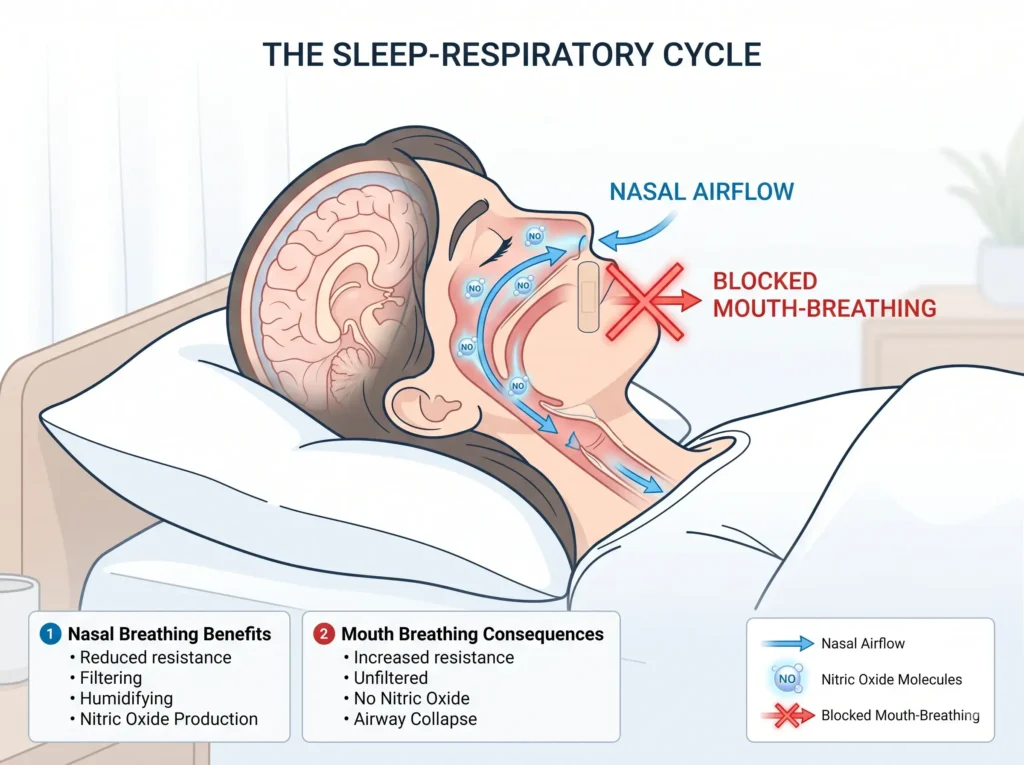
The mechanics are almost too simple. A strip of porous, hypoallergenic tape goes across the closed lips — sometimes a full seal, sometimes just enough to discourage the jaw from dropping open once you’re asleep. Nothing covers the nose. The theory rests on a basic swap: block the easy route (mouth), and the body defaults to the harder-working but healthier route (nose).
Nasal breathing isn’t a wellness trend invented for TikTok. The nose filters particulates, warms cold air before it hits your lungs, and adds humidity that a dry mouth simply can’t. It also produces nitric oxide, a compound tied to blood vessel dilation and better oxygen uptake. Mouth breathing skips all of that — air goes in dry, unfiltered, and cool, which is part of why people who breathe through their mouths overnight tend to wake up with a parched throat.
How to Tape Your Mouth for Sleep, Step by Step
There’s no official medical protocol here, which is itself worth noting. But people who do this safely tend to follow a similar sequence:
- Test nasal breathing while awake first. Sit quietly for a few minutes breathing only through your nose. If that already feels difficult, taping at night is not the move.
- Choose a porous, skin-safe tape made for use on the body — never household tape.
- Patch-test the adhesive on your forearm for 24 hours to check for a reaction before it goes anywhere near your lips.
- Apply a single vertical strip down the center of gently closed lips, or a small horizontal strip, leaving the corners of the mouth free so air can still escape if needed.
- Fold one edge of the tape over on itself to create a small tab, making it fast to peel off if you wake up needing to.
- Start with short trial periods — an hour while reading, then a full night — rather than committing cold to eight hours.
Mouth taping may reduce mild snoring for people with clear nasal passages, but it is not a treatment for sleep apnea, and it carries real risks for anyone with nasal obstruction, breathing difficulties, or anxiety around restricted airflow.
Why Nasal Breathing Matters More Than People Realize
This is where the science is genuinely solid, separate from the tape itself. Chronic mouth breathing during sleep is linked to snoring, because the soft tissue at the back of an open, slack mouth vibrates more easily than tissue supported by a closed jaw. It’s also linked to dry mouth, which raises the risk of cavities and gum irritation over time, and in children, persistent mouth breathing has been associated with altered jaw and dental development.
None of that is controversial. Where things get shakier is the leap from “nasal breathing is better” to “therefore, forcing it with tape is safe and effective for everyone.”
What the Research on Mouth Taping Actually Shows
Small studies exist, and a few of them are genuinely encouraging — for a narrow slice of the population. Research on adults with mild obstructive sleep apnea has shown that a porous patch over the mouth increased the proportion of participants breathing through the nose and, in that same group, correlated with less snoring and fewer breathing lapses, according to findings referenced in research indexed on PubMed. That’s a real, measurable result — but it came from a small, specific group, not the general population of tired, snoring adults.
Other trials tell a less flattering story. A study involving people with asthma found no meaningful improvement in symptoms after mouth taping. Separate research identified something called “mouth puffing,” where participants kept attempting to breathe through their mouths even with tape in place — the body finding a workaround rather than adapting cleanly to nasal-only airflow.
So: is mouth taping safe for snoring? For otherwise healthy people whose only issue is habitual mouth breathing with clear sinuses, early evidence leans cautiously positive on snoring specifically. For anything beyond that — sleep apnea, chronic congestion, structural nasal issues — the evidence doesn’t support it, and several clinicians actively warn against it.
Mouth Taping Benefits for Face Shape and Jawline — Separating Claims from Evidence
One of the most-searched claims is that mouth taping benefits face shape, sharpening the jawline and reducing a double chin by encouraging “proper” tongue posture and nasal breathing over months of consistent use. This idea borrows from orofacial myofunctional theory — the notion that chronic mouth breathing can, over years and typically starting in childhood, influence jaw and palate development.
Applied to an adult sleeping eight hours a night with tape on their lips, the claim is far shakier. There’s no controlled research showing that adult mouth taping meaningfully reshapes a jawline or reduces a double chin. Facial structure in adulthood is largely fixed; soft tissue and posture can shift slightly with habit changes, but tape isn’t a substitute for orthodontic or myofunctional therapy where those are genuinely indicated. Treat this benefit as speculative, not established.
The Question Everyone Actually Asks: “Won’t I Suffocate?”
This is the fear that stops most people before they try it, and it’s a fair one to sit with rather than wave off. One person who’d been mouth taping for over 60 days described talking themselves into trying it despite barely being able to breathe through their nose at first. Their reasoning: the body has an enormous, ancient survival instinct working in its favor. If oxygen genuinely drops too low, the body doesn’t calmly accept it — it panics, floods itself with stress hormones, and forces a wake-up response strong enough to rip tape off in a second. On top of that, nostrils naturally flare and widen under respiratory stress, an involuntary reflex aimed at pulling in more air, not less.
That reasoning tracks with basic physiology — the body’s chemoreceptors are genuinely that sensitive to rising carbon dioxide, and arousal from sleep in response to airway restriction is a well-documented protective reflex. But it’s also exactly why mouth taping is not appropriate for people whose nasal airway is already compromised. That built-in alarm system assumes the nose can eventually let enough air through once it’s triggered. For someone with a badly deviated septum, severe congestion, or untreated obstructive sleep apnea, that assumption doesn’t hold, and the reflex may not be enough to prevent real breathing distress.
Mouth Tape for Sleeping: Side Effects Worth Knowing Before You Start
Even in people without underlying conditions, mouth taping isn’t universally comfortable. Reported issues include:
- Skin irritation — redness, dryness, or a rash where the adhesive sits, especially with repeated nightly use
- Discomfort for anyone with facial hair, where removal can pull and sting
- Disrupted sleep from the sensation of restriction, particularly in the first several nights
- Heightened anxiety, especially for people prone to claustrophobia or panic
- Congestion mid-sleep turning a minor nuisance into a real breathing obstacle with no easy backup route
None of these are rare edge cases — they show up consistently enough across small studies and clinical commentary to be worth planning around, not dismissing.
Is Mouth Taping Safe If You Have Sleep Apnea?
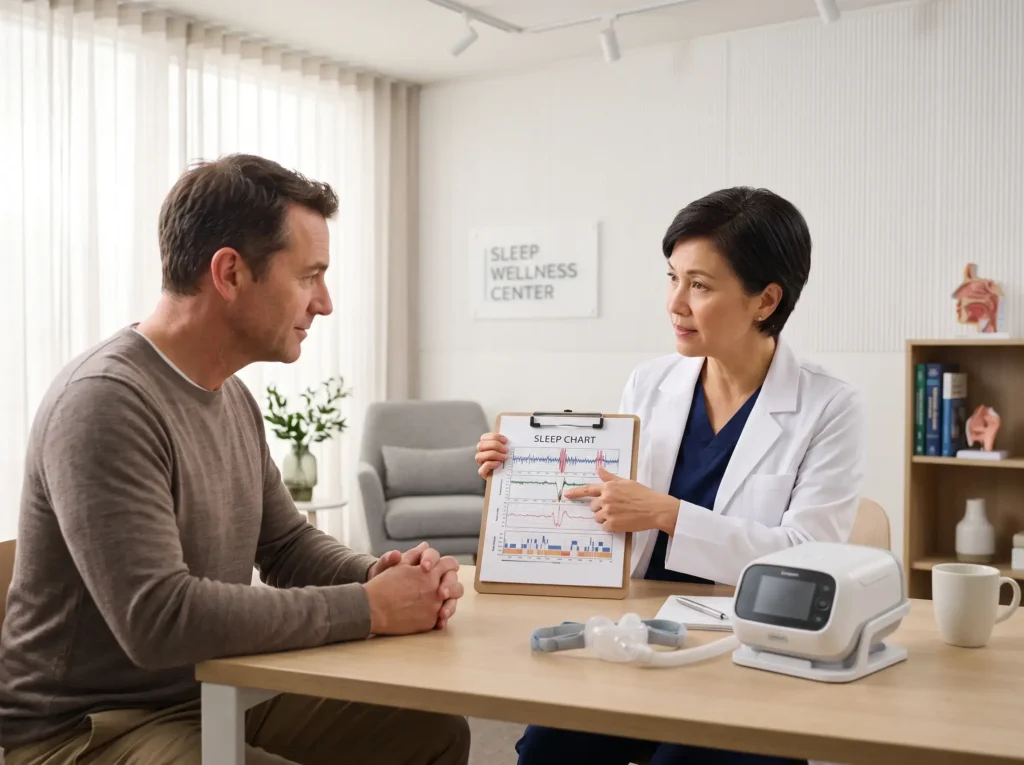
Short answer: not on its own, and not without medical guidance. Obstructive sleep apnea involves repeated airway collapse during sleep, and taping the mouth shut removes the backup breathing route without addressing the actual obstruction. Some limited research has looked at combining mouth taping with CPAP therapy to reduce air leaks from an open mouth, but that’s a targeted, doctor-supervised application — not a stand-alone fix, and not something to self-start based on a suspicion of apnea.
According to clinical guidance summarized by the NHS, red flags like loud, disruptive snoring, gasping or choking during sleep, and excessive daytime fatigue warrant a medical evaluation before trying any home remedy, mouth tape included. If any of that sounds familiar, tape is not the first move — a conversation with a doctor is.
Best Medical Tape for Mouth Taping at Night
Not all tape belongs anywhere near your face overnight. Skip masking tape, packing tape, or anything not designed for skin contact — the adhesive is too aggressive and too likely to cause irritation or a reaction on thin lip skin. What actually works:
- Purpose-made mouth tape products, built specifically for overnight use with breathable, porous material
- Micropore-style medical paper tape, gentle enough for sensitive skin and commonly used in clinical settings
- Hypoallergenic surgical or athletic tape from a pharmacy, provided it’s explicitly rated safe for skin
Whatever you pick, porous matters — it lets some air and moisture through and reduces the odds of trapping sweat and bacteria against the skin all night.
Mouth Tape vs. Nasal Strips for Snoring: Which Actually Helps?
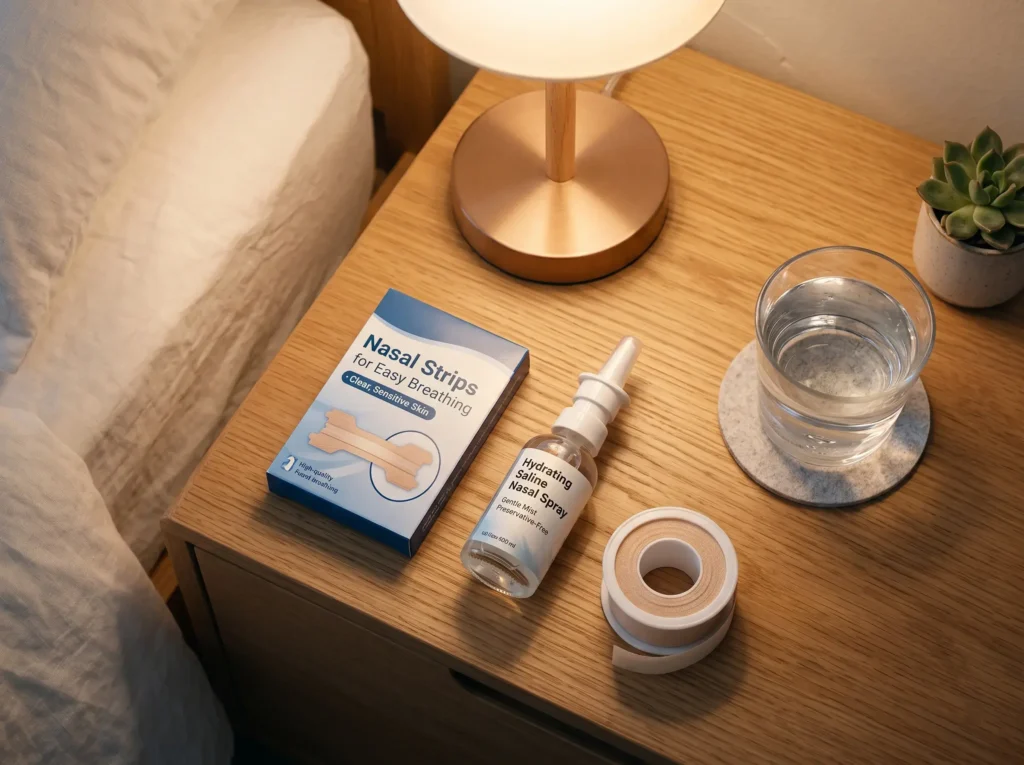
These two get lumped together, but they solve different problems. Nasal strips sit across the bridge of the nose and mechanically widen the nostrils, easing airflow at the entry point. Mouth tape works at the exit point, keeping the mouth closed so the nose becomes the only option. Research on nasal strips alone is mixed — some studies show a snoring reduction, others show none — largely because strips don’t help if the obstruction to snoring is a mouth that keeps falling open, not narrow nostrils.
For people whose snoring stems mainly from mouth breathing, tape may address the root cause more directly. For people whose nasal passages are naturally narrow or slightly congested, strips may help more, and combining both is a common approach — provided nasal breathing is comfortable enough to begin with.
Mouth Taping Alternatives for Nasal Breathing
If tape feels like too much too soon, or your nose can’t reliably handle a full night’s airflow, there are other routes toward the same goal:
- Side sleeping. Consistently shown to reduce snoring compared to sleeping on your back, since gravity keeps the tongue and soft palate from collapsing into the airway.
- Nasal irrigation. Rinsing the nasal passages with saline clears mucus and allergens, directly supporting easier nasal airflow — genuinely useful during allergy season regardless of whether you ever try tape.
- Treating allergies or asthma properly. If congestion is the reason you’re a mouth breather, fixing the congestion solves the actual problem instead of working around it.
- Weight management, and cutting back on alcohol before bed, both of which are linked to reduced airway relaxation and snoring severity.
- An oral appliance or CPAP machine, prescribed after a proper sleep evaluation, for anyone with diagnosed apnea.
How to Train Yourself to Breathe Through Your Nose at Night Naturally
Tape forces the habit; it doesn’t build the underlying capacity. A more gradual approach layers in daytime practice so the nose is actually ready for nighttime use:
- Practice nasal-only breathing during light exercise — a walk, light cycling — a few times a week to build tolerance.
- Address any daytime congestion first, whether that’s allergy management or a saline rinse routine, per guidance available through the National Institutes of Health.
- Try a soft chin strap before jumping to tape, which gently discourages the jaw from dropping without a direct seal on the lips.
- Keep the bedroom air humidified, since dry air makes nasal breathing feel harder than it needs to.
- Reassess after a few weeks. If nasal breathing during the day feels effortless, nighttime taping becomes a far lower-risk step than starting from zero.
When to See a Doctor Instead of Reaching for Tape
Persistent loud snoring, gasping awake, morning headaches, or daytime exhaustion that a full night’s sleep doesn’t fix are signs worth taking to a professional before trying any home fix. So is a child who breathes primarily through their mouth — mouth taping has not been studied in children and shouldn’t be attempted on them. A doctor can identify whether the actual cause is a deviated septum, enlarged tonsils, allergies, or sleep apnea, each of which needs a different fix than a strip of tape can offer.
The Bottom Line
Mouth taping for sleep sits in an unusual spot: plausible mechanism, thin evidence, real benefit for a specific slice of people, and real risk for another slice. If your nose is clear, your snoring is mild, and you’ve ruled out sleep apnea, a cautious trial — starting small, with the right tape, and an easy-exit tab — is reasonable. If any of those conditions aren’t true, the tape isn’t the fix. The congestion, the apnea, or the structural issue underneath it is, and that’s worth a doctor’s attention before it’s worth a strip of adhesive.
This article is for informational and educational purposes only and is not a substitute for professional medical advice, diagnosis, or treatment. Always consult your doctor or a qualified health provider before starting any new diet, exercise, or wellness routine.
Frequently Asked Questions (FAQS) :
Q1. Does mouth taping actually stop snoring, or just muffle it?
For people whose snoring comes from an open, slack mouth, taping can genuinely reduce the vibration that causes noise, because the airway behaves differently when the jaw stays closed. It doesn’t work the same way for snoring caused by tongue position, tonsil size, or airway collapse further back in the throat — those causes need a different solution entirely.
Q2. Can mouth taping worsen a deviated septum or existing nasal blockage?
It won’t change the structure of a deviated septum, but it can make a night with one far more uncomfortable, since it removes the mouth as a pressure-release option. Anyone with a known structural nasal issue should get that evaluated before experimenting with tape.
Q3. Is it normal to feel anxious the first few nights?
Yes, and it’s common enough that most guidance recommends short daytime trials before a full night. A little unfamiliarity fading over a few nights is different from a persistent panic response — the second one is a sign to stop, not push through.
Q4. How long before mouth taping shows results, if it's going to work at all?
Anecdotal reports and the small available studies both point to changes within the first week — less dry mouth, quieter snoring by night three to five for people it suits. If nothing has shifted after two consistent weeks and nasal breathing still feels forced, tape likely isn’t addressing your actual cause.
Q5. Does the type of tape change how safe it is?
For people whose snoring comes from an open, slack mouth, taping can genuinely reduce the vibration that causes noise, because the airway behaves differently when the jaw stays closed. It doesn’t work the same way for snoring caused by tongue position, tonsil size, or airway collapse further back in the throat — those causes need a different solution entirely.

Nova
Health & Neuroscience Writer
Nova simplifies complex sleep architecture, circadian biology, and hormonal mechanics into actionable daily guides.
More in Sleep Science
8 Powerful Ways to Increase REM Sleep (Stop Waking Up Tired)
Sleeping 8 hours but still exhausted? Discover 8 science-backed ways to increase…
How to Fix Sleeping Posture: 4 Proven Ways to Stop Morning Neck Pain
Learn how to fix sleeping posture with 4 research-backed rules. Discover the…
Stop Waking Up Exhausted: 7 Proven Ways to Increase Deep Sleep and REM Sleep Naturally
Sleeping 8 hours but still waking up tired? Discover science-backed habits, foods,…

5 Hidden Tricks: How to Fall Asleep Fast Military Method Really Works!
It's 1 a.m. You have to be up in five hours. Your…

Why You Wake Up at 3AM After Drinking: 3 Shocking Reasons (And the Fix)
Wondering why you wake up at 3am after drinking? Discover the science…

5 Proven Tips for the Best Sleep Schedule for Night Shift Workers
Stop staring at the ceiling! Discover 5 vital strategies to build the…

5 Shocking Secrets to Reset Circadian Rhythm Naturally (No All-Nighters)
Struggling with late bedtimes? Learn 5 proven steps to reset circadian rhythm…

Constantly Wake Up at 3 AM to Pee? Here Are 3 Fixes That Actually Work
Stop the frustrating cycle of wake up at 3 AM to pee.…