

Dr. Amelia
Sleep Specialist & Medical Reviewer • 12+ Years Exp in Behavioral Sleep Medicine
Your eyes snap open. The room is dark, the house is silent, and your mind is suddenly wide awake — running through tomorrow’s to-do list, replaying an awkward conversation, or worrying about something you can’t even name. Then you glance at the clock, and it’s 3 a.m. again.
If you’ve ever asked yourself, why do I wake up at 3am with anxiety, you’re dealing with one of the most common — and most misunderstood — sleep complaints out there. It isn’t bad luck, and it isn’t “just stress.” There’s a real biological explanation behind it, and understanding that explanation is often the first step toward sleeping through it.
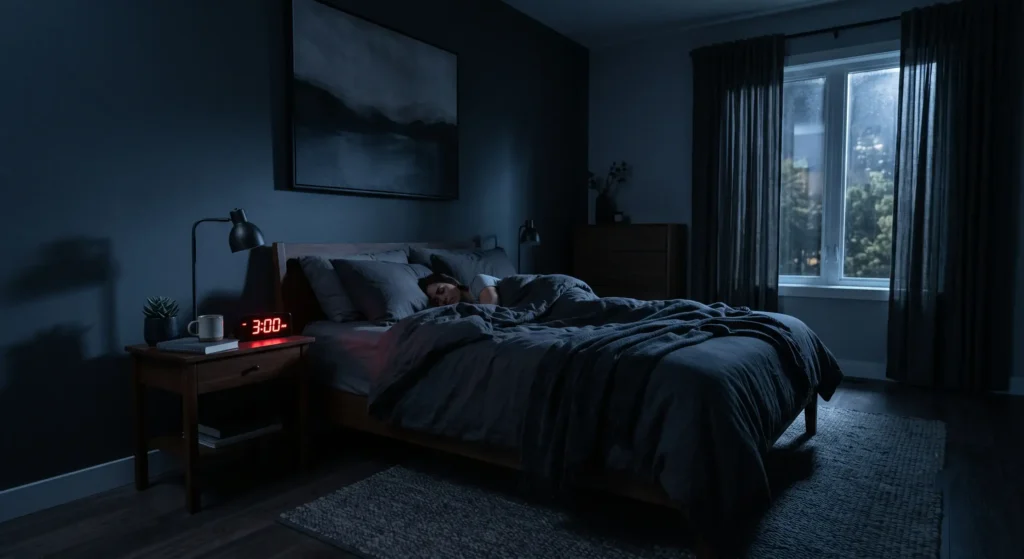
Waking up at 3 a.m. with anxiety is usually caused by natural hormone shifts, lighter sleep stages, and unprocessed daytime stress. When this repeats, your brain starts anticipating the wake-up, making it feel like a habit.Instead of forcing sleep in the moment, focus on calming your body. Managing daytime habits—like sunlight exposure, caffeine intake, exercise, and a proper bedtime wind-down—plays a huge role in preventing this. However, if it becomes a daily issue that impacts your life, it's best to consult a doctor or sleep specialist.
Table of Contents
What It’s Like to Wake Up Anxious at 3 AM
Ask anyone who deals with this regularly, and the description tends to sound eerily similar. One moment you’re asleep; the next, you’re fully alert, and your body has already reacted before your brain has caught up. A racing heart. Tight chest. That heavy, sinking feeling that something is wrong, even when nothing actually is.
The thoughts that show up in those moments also tend to follow a pattern. Did I say the wrong thing earlier? What if tomorrow goes badly? Am I going to be exhausted at work again? It can feel like your brain picked the worst possible time to try to solve every open problem in your life at once.
This is part of why so many people search variations of the same question — why do I wake up anxious at 3am, why am I constantly waking up at 3am, why do I wake up suddenly at 3am — because the experience is disorienting enough that it makes you want an actual explanation, not just a shrug.
Why 3 AM, Specifically?
There’s nothing magical about the number itself, but there’s a reason it shows up so consistently for people who go to bed around 10 or 11 p.m.
The Cortisol Awakening Response
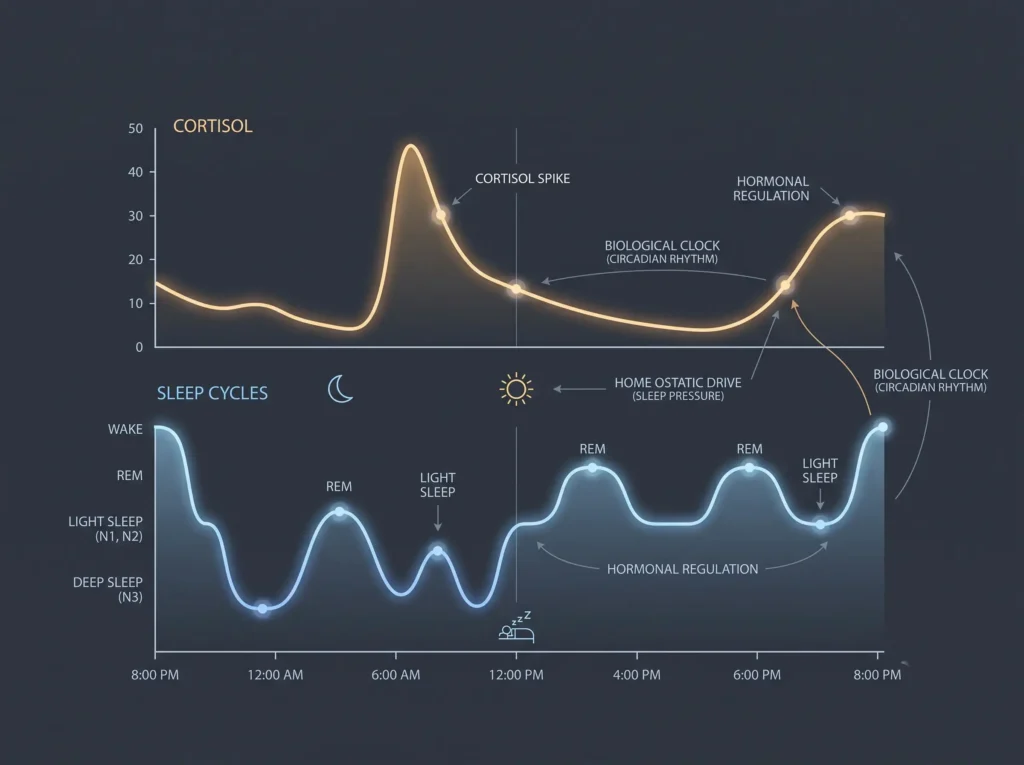
Your body runs on internal timing. Somewhere in the 2–3 a.m. window, cortisol — the hormone responsible for alertness — naturally starts climbing as your body prepares for morning. This happens to everyone, anxious or not. In a well-rested nervous system, this bump barely registers; you might stir for a few seconds and drift right back down without ever remembering it.
In a nervous system that’s already primed for stress, that same cortisol rise can get misread as a threat. Your fight-or-flight system activates as though something urgent is happening, even though nothing is. Heart rate climbs, muscles tense, and suddenly you’re fully conscious and alert at the worst possible hour.
Lighter Sleep Stages Take Over
Sleep isn’t uniform throughout the night. The first few hours are dominated by deep, restorative sleep. After that, your body shifts toward lighter stages and more REM sleep — the dreaming stage — which happens to line up with the middle of the night for a lot of standard bedtimes. Because lighter sleep is easier to wake from, small disturbances (a noise, a change in temperature, or that cortisol bump) are far more likely to fully wake you during this window than they would have a few hours earlier.
Blood Sugar Swings
For some people, the culprit isn’t stress hormones at all, but blood sugar. A drop in glucose overnight can trigger the release of cortisol, adrenaline, and glucagon to bring levels back up — and that hormonal correction can jolt you awake in the process. This is more common after a high-carb dinner, drinking alcohol before bed, or going a long stretch without eating. If you wake up shaky, sweaty, or unusually hungry along with the anxious feeling, it may be worth looking at what and when you’re eating in the evening.
Why Do I Keep Waking Up at 3 AM Every Morning?
This is where things get frustrating for a lot of people — it’s one thing to wake up anxious occasionally, but another to notice it happening at almost the same time, night after night.
Once your brain associates a certain time (or the act of lying in bed anxious) with alertness, it can start to anticipate it — similar to how classical conditioning works. Wake up worried enough times, and your brain begins to expect the disruption before it even happens. Some people report feeling a low hum of anxiety about bedtime itself, simply because they know what’s likely coming.
This pattern has a clinical name: sleep maintenance insomnia. Unlike trouble falling asleep at the start of the night, this is specifically about staying asleep, and it tends to respond best to changing your nighttime behavior rather than just trying harder to sleep.
➟ 5 Proven Steps to Fix Sleep Schedule After Staying Up All Night
A Real Example: How One Person Deals With It
Clay, who reached out to share his experience, put it simply: sleeping issues hadn’t been a problem for years until his anxiety became more intense recently, and the 3 a.m. wake-ups followed soon after.
His approach focuses on reducing stimulation before bed — no phone for two hours beforehand, something lighthearted like a funny show or a book instead, and aiming for a consistent 10 p.m. bedtime (which he admits gets tricky around his one weekly night shift). He keeps his room comfortable with a fan running and blankets adjusted so he doesn’t wake up too hot or too cold, and if something from the day is still on his mind, he allows himself to briefly revisit it before deliberately working through a calming routine to settle back down. Repeating reassurance to himself — that he’s going to sleep well — rather than worrying about not sleeping, then finishing with a guided meditation, has been part of what helps him switch his mind off.
When he does wake at 3 a.m., his routine is consistent: use the bathroom, sit on the couch, and focus on his breathing rather than staying in bed frustrated. If that doesn’t settle him, he’ll restart the guided meditation or play soft music.
What stands out about his approach isn’t any single trick — it’s that he built a repeatable plan and stuck with it, while accepting that what works varies from person to person.
What to Do in the Moment
If you’re already awake and anxious, the goal isn’t to force sleep — it’s to calm your body enough that sleep can return on its own.
- Don’t fight it in bed for too long. If you’re still awake after 15–20 minutes, get up rather than lying there getting more frustrated. Staying in bed while anxious can teach your brain to associate the bed itself with stress.
- Keep the lights low. Bright light signals your brain that it’s morning. Stick to dim lighting if you need to move around.
- Do something boring, not stimulating. A dry book, quiet stretching, or calming music works better than checking your phone or turning on the TV.
- Try slow breathing. A method like inhaling for four seconds, holding for seven, and exhaling for eight can help shift your nervous system out of alert mode.

- Skip the problem-solving. It’s tempting to “figure things out” while you’re lying there, but working through decisions or replaying conversations at 3 a.m. tends to keep people awake longer, not shorter.
- Leave your phone alone. Beyond the blue light suppressing melatonin, scrolling gives your brain something new to engage with right when you’re trying to wind down again.
- Go back to bed when you’re actually sleepy, not just because you think enough time has passed.
Daytime Habits That Affect Nighttime Wake-Ups
What happens during the day has more influence over 3 a.m. wake-ups than most people expect.
Getting outside for natural light within the first hour of waking helps set your circadian rhythm, which in turn supports more consolidated sleep at night. Regular exercise — ideally not right before bed — tends to improve sleep quality overall. Caffeine lingers longer than people assume, so an afternoon coffee can still be affecting you well into the evening. And while alcohol might help you fall asleep faster, it tends to fragment sleep later in the night, right around the window when these wake-ups typically happen.
Some people also find it helpful to set aside a short block of time earlier in the day specifically for worrying or planning, so that when anxious thoughts show up at 3 a.m., there’s already a mental note: I’ve got time set aside for this tomorrow.
When to Get Professional Help
Occasional wake-ups are normal. But if you’re waking up anxious at nearly the same time several nights a week, if it’s affecting your mood or energy during the day, or if it’s paired with other symptoms — loud snoring, gasping for air, chest pain, or extreme daytime fatigue — it’s worth bringing up with a doctor.
Cognitive Behavioral Therapy for Insomnia (CBT-I) is generally considered the most effective long-term approach for this kind of sleep disruption, often outperforming sleep medication over time. A doctor can also help rule out underlying issues like sleep apnea, blood sugar regulation problems, or an anxiety disorder that may need its own treatment.
The Bottom Line
Waking up at 3 a.m. with anxiety comes down to a mix of biology and habit — a normal hormonal shift meeting a nervous system that’s already on alert, layered with sleep stages that make you easier to wake in the first place. It’s uncomfortable, but it’s also a pattern that tends to respond well to changes in both your nighttime routine and your daytime habits. If you’ve been asking yourself why you wake up at 3am with anxiety on a regular basis, know that it’s a recognized and treatable pattern — not something you’re stuck with indefinitely.
This article is for informational and educational purposes only and is not a substitute for professional medical advice, diagnosis, or treatment. Always consult your doctor or a qualified health provider before starting any new diet, exercise, or wellness routine.
Frequently Asked Questions (FAQs):
Q1. How do I stop waking up with anxiety?
The most effective approach isn’t forcing sleep — it’s calming your body so sleep returns naturally. If you’re awake more than 15–20 minutes, get out of bed, keep lights dim, try slow breathing (like a 4-7-8 count), and avoid problem-solving or checking your phone. Building consistent daytime habits — morning light, regular exercise, and an earlier caffeine cutoff — also reduces how often you wake up anxious at 3am in the first place.
Q2. How to overcome sleep anxiety naturally?
Focus on winding down before bed and reducing stimulation — avoid screens, keep the room comfortable, and try relaxation techniques like slow breathing or a calming routine instead of medication. During the day, getting natural light early, exercising regularly, and setting aside dedicated time to process worries can lower the chances of anxiety disrupting your sleep at night. Consistency matters more than any single trick — what works varies from person to person.
Q3. Does anxiety get worse at night?
Yes — cortisol naturally rises between 2–3 a.m. as part of your body’s normal cycle, and in an already-stressed nervous system, this shift can trigger a stronger alertness response than during the day. Sleep also becomes lighter during the second half of the night, making it easier for anxious thoughts or physical sensations to fully wake you up.
Q4. What is the best sleep position for anxiety?
Sleeping on your back is generally considered the best option, since it keeps your spine neutral and reduces pressure or pain that can otherwise lead to frequent awakenings. Left-side sleeping is also commonly recommended, as it can support digestion and relaxation. That said, evidence is mixed, and comfort matters as much as the “ideal” position — there’s currently no strong evidence that side-sleeping direction alone changes anxiety levels, so it’s worth pairing whatever position you choose with a calming bedtime routine.
Q5. How much anxiety is normal?
Normal anxiety is anxiety that’s proportionate to the actual situation, time-limited, and doesn’t stop you from functioning day to day — like nerves before a job interview or a big test. It becomes a concern when it turns into excessive worry that’s out of proportion to the situation and interferes with your ability to function, especially if it persists for six months or more. If your anxiety is regularly disrupting your sleep or daily life rather than settling once the stressor passes, that’s the signal to talk to a professional.

Nova
Health & Neuroscience Writer
Nova simplifies complex sleep architecture, circadian biology, and hormonal mechanics into actionable daily guides.
More in Sleep Science
8 Powerful Ways to Increase REM Sleep (Stop Waking Up Tired)
Sleeping 8 hours but still exhausted? Discover 8 science-backed ways to increase…
How to Fix Sleeping Posture: 4 Proven Ways to Stop Morning Neck Pain
Learn how to fix sleeping posture with 4 research-backed rules. Discover the…
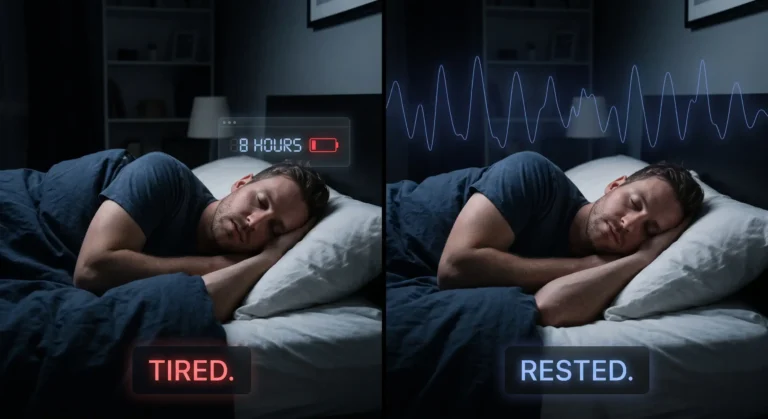
Stop Waking Up Exhausted: 7 Proven Ways to Increase Deep Sleep and REM Sleep Naturally
Sleeping 8 hours but still waking up tired? Discover science-backed habits, foods,…

5 Shocking Mouth Taping for Sleep Mistakes That Can Ruin Your Health
Discover the real benefits, hidden risks, and safety steps of mouth taping…

5 Hidden Tricks: How to Fall Asleep Fast Military Method Really Works!
It's 1 a.m. You have to be up in five hours. Your…

Why You Wake Up at 3AM After Drinking: 3 Shocking Reasons (And the Fix)
Wondering why you wake up at 3am after drinking? Discover the science…

5 Proven Tips for the Best Sleep Schedule for Night Shift Workers
Stop staring at the ceiling! Discover 5 vital strategies to build the…

5 Shocking Secrets to Reset Circadian Rhythm Naturally (No All-Nighters)
Struggling with late bedtimes? Learn 5 proven steps to reset circadian rhythm…