

Dr. Gianna
Longevity & Metabolic Health Expert • 10+ Years Exp in Integrative Physiology
You’ve probably stood in front of two sauna options at your gym and wondered which one is worth your time. One glows with amber panels and feels almost mild. The other hits you like a wall of dry heat the second you open the door. Both promise the same things: better sleep, looser muscles, a calmer nervous system. So which one delivers?
The honest answer is that the infrared sauna vs traditional sauna debate isn’t really about winners and losers. It’s about matching the tool to your body, your tolerance, and what you’re actually trying to fix — sore muscles, high blood pressure, poor sleep, or just twenty minutes of quiet. Let’s break down what’s actually happening inside your cells when you sit in either one, because the mechanism matters more than the marketing.
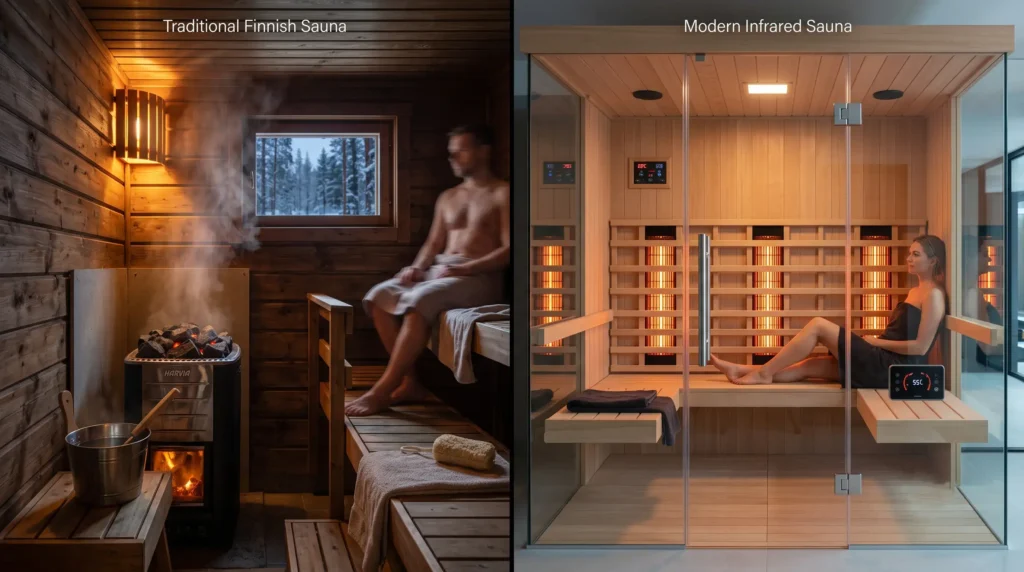
Table of Contents
How Infrared Saunas Work vs Traditional Saunas
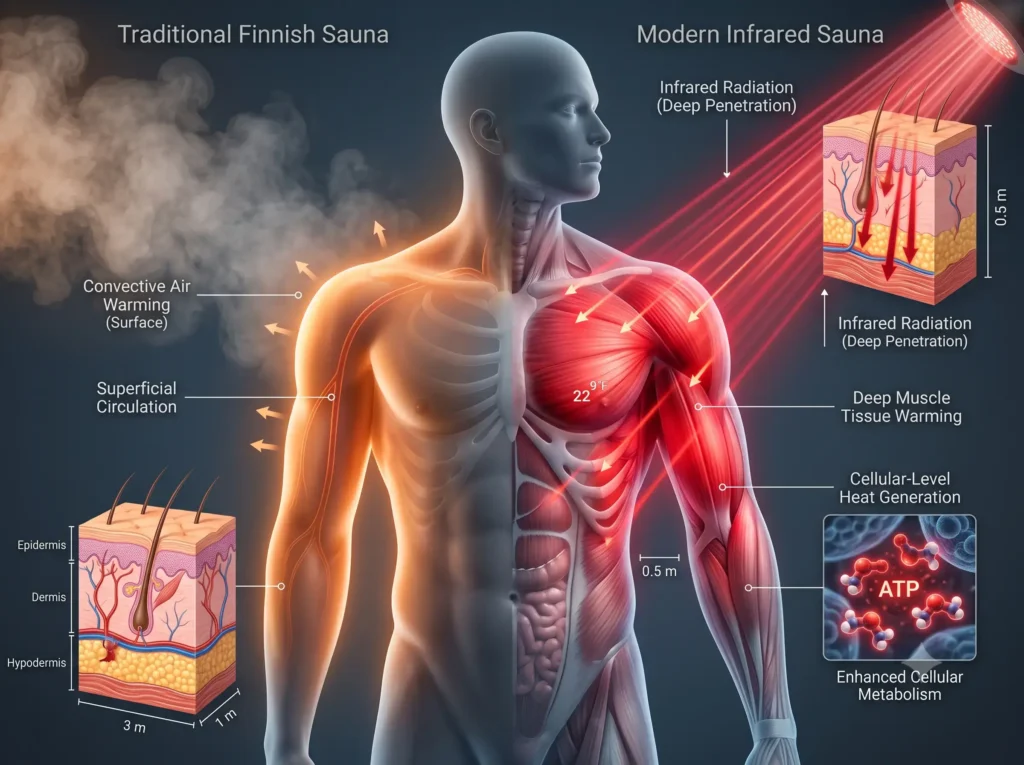
A traditional Finnish sauna heats the air around you, usually with an electric heater or a wood-burning stove topped with rocks. That hot air — often between 150°F and 195°F — then transfers heat into your skin and, eventually, your core. Splash water on the rocks and you get a burst of steam, known as löyly, which spikes humidity and intensifies the sensation.
An infrared sauna skips that step entirely. Infrared panels emit electromagnetic radiation that your tissue absorbs directly, warming you from the inside without heating the room nearly as much. The air stays a relatively mild 100°F to 150°F, while your body still climbs toward a genuine sweat. This is the same category of energy your skin picks up from sunlight through a car window — it has nothing to do with UV rays, tanning, or sunburn risk.
Most home and studio units use far-infrared wavelengths (roughly 5.6 to 1,000 micrometers), which penetrate 3 to 4 centimeters into tissue, reaching fat and the neuromuscular layer. Near-infrared and mid-infrared wavelengths sit closer to the surface. Full-spectrum saunas combine all three, though far-infrared remains the most studied of the group.
| Feature | Infrared Sauna | Traditional Sauna |
|---|---|---|
| Temperature | 100°F–150°F | 150°F–195°F |
| Heating method | Radiant panels heat the body directly | Heated air warms the body |
| Humidity | 10%–20% | 5%–15% (higher with water on rocks) |
| Warm-up time | ~2 minutes | 20–40 minutes |
| Typical session | 20–45 minutes | 10–20 minutes |
The Real Reason Both Work: Heat Shock Proteins
Here’s the part most sauna articles skip entirely, and it’s the piece that actually explains why either style of sauna delivers results.
When your core temperature climbs, proteins inside your cells start to lose their shape — a process called protein denaturation. That instability is a distress signal. Your cells respond by activating a master switch called Heat Shock Factor 1 (HSF1), which moves into the cell nucleus and binds to sections of DNA known as Heat Shock Elements. That binding triggers the rapid production of Heat Shock Proteins (HSPs) — molecular chaperones that refold damaged proteins, clear out cellular debris, and toughen the cell against future stress.
This is the same adaptive machinery your body leans on after strength training, which is part of why sauna sessions are often described as mimicking exercise. Research indexed on PubMed has shown that a 30-minute session in a hot sauna can raise HSP levels by roughly 50% above baseline — a meaningful cellular adaptation from sitting still.
The dose matters. HSP induction is time- and temperature-dependent:
- Traditional saunas (176°F–212°F): shorter exposure, typically 15–20 minutes, is usually enough to trigger a strong heat shock response.
- Infrared saunas (110°F–150°F): because the air is cooler, you need longer in the chamber — generally 20 to 30 minutes — to reach an equivalent core temperature rise.
So when people ask how long should you stay in an infrared sauna for real physiological benefit, the answer isn’t arbitrary. Twenty to thirty minutes is the range where the research on HSP production actually clusters. Go shorter and you’re mostly getting relaxation and light sweating rather than a meaningful protein-stress response.
Traditional saunas trigger HSP production through intensity. Infrared saunas trigger it through duration. Neither is "cheating" — they're just reaching the same cellular target from different directions.
➟ 72-Hour Extended Fasting Autophagy Protocol: Proven Cellular Reset
Sauna Therapy for Muscle Recovery
Both sauna types dilate blood vessels and increase circulation, which delivers oxygen and nutrients to fatigued tissue faster than it would arrive on its own. For athletes, this translates into measurably less soreness after intense training and, in some cases, improved performance on subsequent sessions.
Infrared’s advantage here is practical rather than physiological: because the chamber itself stays cooler, people can comfortably tolerate longer sessions. A 45-minute infrared block is far more sustainable for most people than 45 minutes in a 190°F traditional sauna — and that extra time in the heat is exactly what drives sustained blood flow to sore muscles.
This tracks with what regular users report anecdotally. One infrared user described it this way in an online sauna community:
“I use my infrared almost daily and it’s incredible for muscle stiffness. Gets my heart going, I sweat a lot and feel amazing after.”
That kind of daily consistency — heart rate up, genuine sweat, noticeable relief in stiff muscles — is exactly the pattern researchers point to when they describe infrared sauna use as a low-impact substitute for the cardiovascular and circulatory response of moderate exercise. It’s also a useful reminder that the infrared-versus-traditional debate can get more heated online than it needs to be. The same user pushed back on the idea that infrared users have somehow been “duped,” pointing out that infrared devices weren’t named saunas by accident — they’re wood-built, you sit in them, you sweat, and your heart rate climbs, all core features shared with Finnish-style bathing. Traditional sauna culture is worth protecting, but the overlap between the two methods is real, not marketing spin.

Heart Health: The Strongest Evidence Either Way
If there’s one benefit with genuinely solid research behind it, it’s cardiovascular. Sitting in a sauna — infrared or traditional — pushes your heart rate up to 120–150 beats per minute, comparable to a brisk walk or light jog. Blood vessels widen, blood pressure drops in the short term, and your circulatory system gets a workout without your joints taking any impact.
A large long-term study published in Mayo Clinic Proceedings found that men who used a sauna four to seven times per week had roughly a 47% lower risk of developing high blood pressure compared to those who used one once a week or less. The proposed mechanism is improved endothelial function — heat exposure appears to help arteries relax and dilate more efficiently over time, an effect documented in cardiovascular research summarized by the National Institutes of Health.
Separate cohort research has connected frequent sauna bathing with a lower risk of fatal cardiovascular events, and other work has tied regular sessions to reduced systemic inflammation — a known contributor to heart disease, arthritis, and several cancers.
Sauna Benefits for Longevity
This is where the research gets genuinely striking, and it’s the reason sauna use has moved from “nice relaxation habit” to a topic longevity researchers take seriously.
A widely cited 2021 review in Experimental Gerontology found that men who used a sauna four to seven times weekly had a 66% lower chance of developing dementia and a 65% lower chance of developing Alzheimer’s disease, compared with men who sauna-bathed only once a week. Researchers suspect this connects back to the same heat-shock and circulatory pathways discussed above — reduced inflammation, improved vascular function, and better protein maintenance inside neurons.
None of this means a sauna replaces sleep, exercise, or a cardiologist. But the dose-response pattern across multiple independent studies — more frequent sessions correlating with lower disease risk — is consistent enough that public health researchers keep revisiting it. For general guidance on healthy heat exposure and existing medical conditions, the NHS recommends checking with a doctor before starting any new heat-therapy routine if you have a cardiovascular condition.
Far Infrared Sauna Health Benefits Beyond the Basics
Far-infrared exposure specifically has been studied for a handful of benefits that go beyond the general “sauna equals good” narrative:
- Skin quality: Clinical research has linked regular far-infrared sessions to increased collagen and elastin production, along with improved skin texture.
- Respiratory function: Heat and mild humidity together promote bronchodilation and may ease airway inflammation, though most of the strongest data here comes from traditional rather than infrared sauna studies.
- Body composition: One frequently cited study from Binghamton University found participants using infrared sessions three times weekly for four months lost an average of 4% body fat — though this is more likely tied to consistent activity and hydration habits than the heat itself “melting” fat directly. Be skeptical of any claim that a single session burns 600 calories; that figure sits at the extreme high end and isn’t representative of typical sessions.
- Chronic pain: A two-year study on infrared sauna therapy for chronic pain conditions found improved outcomes over the study period, adding to older evidence on traditional sauna use for arthritis and fibromyalgia-type pain.
Sauna Temperature and Duration Guide
Whichever style you choose, dialing in temperature and time correctly is what separates a therapeutic session from a wasted one — or worse, a genuinely risky one.
Traditional sauna:
- Temperature: 150°F–195°F
- Duration: 10–20 minutes
- Frequency: 3–4 sessions per week for general benefit; 4–7 for the cardiovascular and longevity effects seen in longer studies
Infrared sauna:
- Temperature: 100°F–150°F (beginners should start around 100°F–110°F)
- Duration: 20–45 minutes, building up gradually from 5–10 minutes in your first sessions
- Frequency: 3–5 sessions per week; some healthy, well-hydrated users tolerate daily sessions
First-timer checklist:
- Drink a full glass of water before entering, and bring more in with you
- Start at the lowest comfortable temperature and shortest duration
- Set a timer — don’t guess
- Skip alcohol beforehand entirely
- Cool down gradually afterward, then shower and rehydrate
Who Should Be Cautious With Either Sauna Type
Sauna bathing is low-risk for most healthy adults, but it isn’t risk-free. Certain groups should get medical clearance first, or avoid sauna use altogether:
- Pregnant individuals — heat exposure, especially in the first trimester, has been linked to developmental risks
- People with unstable heart conditions — including arrhythmias, heart failure, or recent cardiac events
- Anyone with low blood pressure or on medications that affect blood pressure or hydration, such as diuretics
- People with multiple sclerosis, who are often heat-intolerant
- Anyone currently ill or running a fever
- Children, whose temperature regulation differs from adults and who should be supervised closely if permitted at all
If you experience confusion, a racing heart, or a fever above 104°F after a session, that’s a medical emergency warranting immediate attention, not something to sleep off. The CDC lists similar warning signs under general heat-illness guidance, and they apply just as much to sauna-induced hyperthermia as to outdoor heat exposure.
So Which One Should You Actually Choose?
If you want intensity, a fast session, and centuries of bathing tradition behind you, a traditional Finnish sauna delivers a stronger heat-shock response in less time. If you want a gentler entry point, longer sessions you can actually sit through, and a setup that’s realistic to own at home, infrared is the more sustainable habit for most people.
Neither is a gimmick, and neither is a miracle. What matters most in the infrared sauna vs traditional sauna decision is consistency — the research on heart health, inflammation, and longevity keeps pointing to frequency as the real driver of benefit, not which type of heat gets you there. Pick the one you’ll actually use four times a week, respect the hydration and duration guidelines, and let your cells do what they’re already built to do under a little controlled stress.
The Bottom Line
Both infrared and traditional saunas trigger the same core biological response — a rise in core temperature that activates Heat Shock Proteins, dilates blood vessels, and pushes your heart rate into a light-exercise zone. Traditional saunas get you there faster through raw heat; infrared saunas get you there more gently through longer, more tolerable sessions. Neither is objectively “better” — the research on cardiovascular health, muscle recovery, and longevity applies to both, provided you show up consistently, hydrate properly, and respect the duration guidelines for whichever type you choose. If you have a pre-existing heart condition, are pregnant, or are managing a chronic illness, treat this as a routine to build with your doctor, not around them.
Frequently Asked Questions
Q1. Is infrared sauna as effective as a traditional sauna?
For most measured benefits — heart rate response, circulation, muscle recovery, and Heat Shock Protein production — infrared saunas produce effects comparable to traditional saunas, provided sessions run slightly longer (20–30 minutes vs. 15–20 minutes) to compensate for the lower air temperature.
Q2. How long should you stay in an infrared sauna?
Most research on Heat Shock Protein induction and cardiovascular benefit points to 20 to 30 minutes per session as the effective range. Beginners should start with 5 to 10 minutes at a lower temperature and build up gradually over several weeks.
Q3. Which is better for muscle recovery, infrared or traditional sauna?
Both improve muscle recovery by increasing blood flow to fatigued tissue. Infrared saunas often have a practical edge because their lower air temperature lets people comfortably sit through longer sessions, extending the window of improved circulation.
Q4. Can you use an infrared sauna every day?
Healthy, well-hydrated adults can often tolerate daily infrared sauna use, though most guidelines recommend 3 to 5 sessions per week as the safer default. Anyone with a heart condition, low blood pressure, or another chronic condition should confirm frequency with a doctor first.
Q5. Do infrared saunas help with longevity the same way traditional saunas do?
Most of the strongest longevity data — including the widely cited dementia and Alzheimer’s risk reductions — comes from traditional sauna studies conducted in Finland. Infrared saunas are believed to trigger similar pathways (heat shock response, improved vascular function), but dedicated long-term longevity studies specific to infrared use are still limited.

Lyra
Biohacking & Human Performance Writer
Lyra explores human optimization, cellular health, protocols, and data-backed performance habits.
More in Biohacking

72-Hour Extended Fasting Autophagy Protocol: Proven Cellular Reset
Learn the proven 72-hour extended fasting autophagy protocol. Discover exact hour-by-hour cellular…

Stop Lymphatic Drainage Pregnancy Massage Until You Know These 4 Shocking Facts
Somewhere around week 28, a lot of women stop recognising their own…

Waking Up in the Middle of the Night in Early Pregnancy: Why It Happens and What Actually Helps
Discover how lymphatic drainage pregnancy techniques relieve first-trimester insomnia, reduce fluid buildup,…
7 Proven Polyvagal Exercises for Nervous System Regulation: End Chronic Panic & Feel Safe
Logic can't talk your body down from panic. Master 7 polyvagal exercises…

8 Powerful Ways to Increase REM Sleep (Stop Waking Up Tired)
Sleeping 8 hours but still exhausted? Discover 8 science-backed ways to increase…
How to Fix Sleeping Posture: 4 Proven Ways to Stop Morning Neck Pain
Learn how to fix sleeping posture with 4 research-backed rules. Discover the…

Stop Waking Up Exhausted: 7 Proven Ways to Increase Deep Sleep and REM Sleep Naturally
Sleeping 8 hours but still waking up tired? Discover science-backed habits, foods,…

Don’t Ignore These 9 Warning Early Perimenopause Symptoms in 30s
Struggling with irregular cycles or fatigue? Don't ignore these early perimenopause symptoms…