
Dr. Atlas
Preventive Medicine & Wellness Advisor • 8+ Years Exp in Preventive Healthcare
You’re 34. Maybe 37. Your periods used to run like clockwork, and now they don’t. One month you’re changing a pad every hour; the next, you skip a cycle entirely. You’re exhausted by 8 p.m., your chest feels tender in ways it never has, and your patience has a shorter fuse than it used to.
If you’ve quietly wondered whether these could be early perimenopause symptoms in 30s, you’re not imagining things — and you’re not alone. Hormonal shifts that most people associate with your late 40s or 50s can, for a meaningful number of women, begin more than a decade earlier. This guide walks through what’s actually happening in your body, the full range of symptoms to watch for, how early perimenopause differs from the “normal” kind, and what steps to take next.

Table of Contents
What’s Actually Happening in Your Body
Perimenopause is the hormonal transition that precedes menopause — the point at which you’ve gone 12 consecutive months without a period. It isn’t a switch that flips; it’s a gradual, uneven decline in ovarian function that can stretch across several years, sometimes closer to a decade.
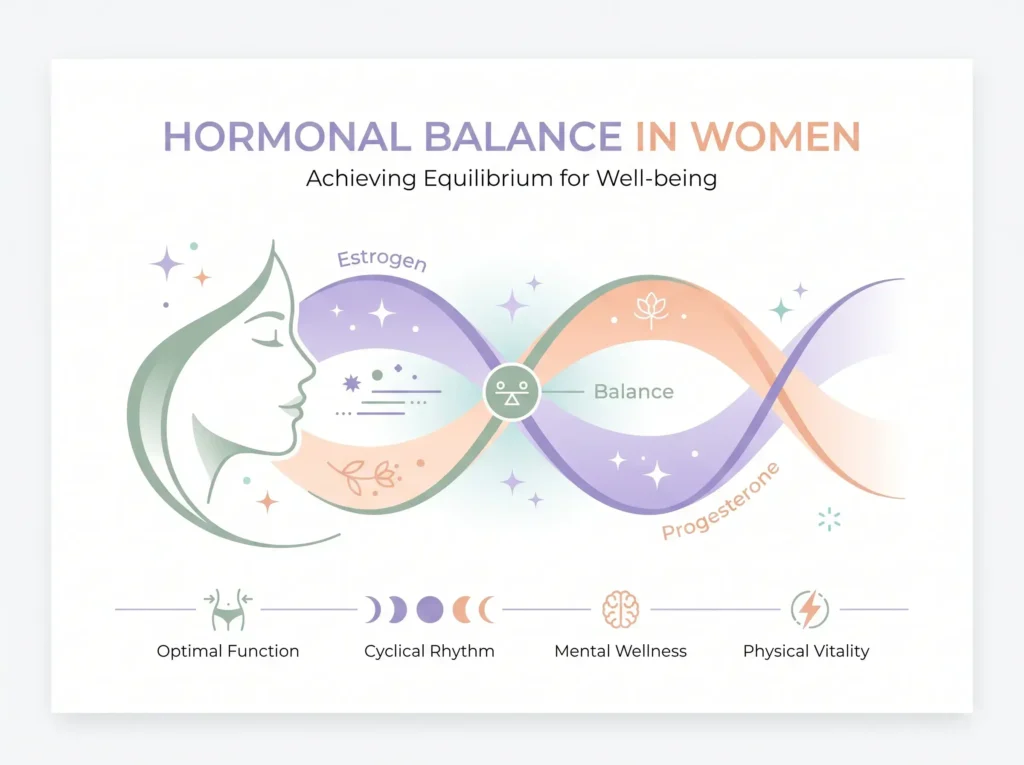
Here’s the part most people miss: the earliest hormonal shifts usually involve progesterone, not estrogen. Progesterone is only produced after ovulation, and as ovulation becomes less consistent in your mid-to-late 30s, progesterone drops first. Because progesterone has a calming, sleep-supporting effect on the nervous system, this early decline is often what triggers anxiety, disrupted sleep, and shorter, heavier cycles — long before a single hot flash shows up.
Meanwhile, estrogen doesn’t fall steadily. It spikes and dips unpredictably, sometimes surging higher than usual before crashing. This erratic pattern — low progesterone paired with fluctuating estrogen — is sometimes referred to as relative estrogen dominance, and it explains symptoms like breast tenderness, bloating, and heavier bleeding that can catch women completely off guard in their 30s.
Feeling "too young" for perimenopause is one of the biggest reasons women go years without answers. Recognizing the pattern early is what gets you support sooner.
The Early Perimenopause Symptoms Checklist
Think of this as a premature perimenopause symptoms checklist you can hold up against your own experience. Not every symptom needs to be present, and severity varies enormously from woman to woman.
Menstrual Cycle Changes
- Cycles shortening to 21–24 days (instead of the typical 28)
- Cycles stretching out, sometimes to 35+ days
- Heavier bleeding or new clotting
- Lighter, shorter periods
- Spotting between cycles
- Skipping a period occasionally
Physical Symptoms
- Hot flashes or sudden warmth, even mild ones
- Night sweats or waking up overheated
- Breast tenderness or pain before your period
- Heart palpitations
- Persistent fatigue, even after adequate sleep
- Joint aches or new morning stiffness
- Headaches around your cycle
- Bloating and fluid retention
- Weight changes, particularly around the abdomen
Emotional and Cognitive Symptoms
- Increased anxiety or a shorter emotional fuse
- Mood swings that feel disconnected from your circumstances
- Brain fog, forgetfulness, or trouble finding words
- Waking at 2–4 a.m. and struggling to fall back asleep
- Low motivation or a flattened sense of enjoyment
Reproductive and Urinary Symptoms
- Vaginal dryness or discomfort during sex
- Lower libido
- Increased urinary urgency or frequency
- More frequent urinary tract infections
If you’re mentally checking off items from a broader 34 symptoms of perimenopause checklist, know that clinicians increasingly recognize this wide net — estrogen receptors exist throughout the body, from your brain to your bladder to your skin, which is exactly why symptoms show up in so many unrelated-seeming ways.
A Real Story: What Early Symptoms Actually Look Like
Marry, now approaching 50, describes how her symptoms crept in almost unnoticed:
“My symptoms started when I was in my late 30s. Looking back, I can see that my periods started to get heavier when I was around 36–38 years old. I wasn’t even aware that perimenopause was a thing — my parents and aunts never mentioned it. I assumed menopause happened in your 50s.”
By her early 40s, new symptoms appeared that she’d never experienced before: “very painful breasts before my period, heart palpitations and tiredness. Most evenings I could barely keep my eyes open. I thought I was just getting old.” It wasn’t until a friend going through the same thing spoke openly about it that Marry connected the dots.
Her story reflects a pattern seen across many women’s experiences: the process is gradual, the symptoms overlap with everyday stress or “just getting older,” and it often takes hearing someone else’s story to recognize your own. Marry manages her symptoms today without HRT — relying instead on targeted supplements, regular exercise, and a lower-carbohydrate diet to manage abdominal weight changes. That approach works for her, but it isn’t the right fit for everyone, and it’s worth discussing options with a clinician rather than assuming one path fits all.
She also raises a point worth sitting with: women are frequently warned that fertility drops sharply from their mid-30s onward, yet that same age bracket is rarely connected to perimenopause in routine medical conversations. The two are talking about the same biological shift from two different angles.
Unusual Early Perimenopause Symptoms Worth Knowing
Some symptoms don’t make the standard lists but come up often enough to be worth naming:
- New breast tenderness that wasn’t part of your normal premenstrual pattern
- Heart palpitations, particularly at rest or at night
- Electric-shock sensations under the skin just before a hot flash
- Tingling in the extremities
- Itchy or crawling skin sensations (formication)
- Burning mouth or altered taste
- Dizziness unrelated to any other cause
None of these are exclusive to perimenopause, which is exactly why ruling out other explanations matters before assuming hormones are the cause.
Signs of Early Menopause at 35 vs. Early Perimenopause
It’s worth separating two related but distinct situations.
Early perimenopause means your hormones are fluctuating and cycles are changing, but you’re still having periods, even irregular ones, and ovulation is still occurring at least some of the time.
Signs of early menopause at 35 are more specific: periods stopping altogether before age 45 is classified as early menopause, and before age 40 as premature menopause or premature ovarian insufficiency. According to NHS guidance on early or premature menopause, the main symptom is periods becoming irregular or stopping completely before 45, alongside hot flushes, vaginal dryness, low mood, and difficulty sleeping. Family history, smoking, being underweight, and certain medical treatments — including chemotherapy, radiotherapy, or ovary-removal surgery — all raise the likelihood of this happening earlier than average.
The distinction matters clinically. Perimenopause is a transition; premature or early menopause carries a higher long-term risk of osteoporosis and cardiovascular disease, which is why hormone replacement is often recommended specifically to protect bone and heart health when menopause occurs unusually early — not just to manage symptoms.
Early Perimenopause vs. Normal Perimenopause
| Factor | Early Perimenopause (30s) | Typical Perimenopause (mid-40s+) |
|---|---|---|
| Usual onset | Late 30s to early 40s | Mid-to-late 40s |
| First symptoms | Sleep disruption, anxiety, breast tenderness | Cycle changes, hot flashes |
| Symptom driver | Progesterone drop, erratic estrogen | Steady estrogen decline |
| Fertility impact | Reduced but pregnancy still possible | Reduced but pregnancy still possible |
| Clinical workup | More likely to include thyroid, AMH, ruling out POI | Usually diagnosed on symptoms alone |
| Long-term risk focus | Bone and cardiovascular protection if periods stop before 40–45 | Standard menopause monitoring |
The biology is the same process; the timeline and the clinical caution are what differ.
How to Know If You Are in Early Perimenopause
There’s no single blood test that confirms perimenopause definitively, because hormone levels swing too much day to day to be reliable on their own. That said, a structured approach helps:
- Track your cycle for 2–3 months. Note cycle length, flow changes, and any spotting.
- Log symptoms alongside your cycle — sleep quality, mood, hot flashes, breast tenderness — so patterns become visible rather than anecdotal.
- Request targeted testing. FSH, estradiol, thyroid panel (TSH), and sometimes AMH can help rule out thyroid disease or primary ovarian insufficiency, even though no single result confirms perimenopause outright.
- Rule out overlapping conditions. Thyroid disorders, anemia, and chronic stress can mimic several of these symptoms closely, which is why a clinical review matters before assuming it’s hormonal. Research summarized on PubMed has repeatedly noted that perimenopausal symptom studies remain underrepresented for women under 40, which is part of why misdiagnosis and delayed care are so common at this age.
- Bring your notes to a healthcare provider rather than waiting for symptoms to become disruptive.
You don't need a definitive diagnosis to start a conversation. A symptom log is often more useful to a clinician than a single blood test result.
What Causes Perimenopause to Start Early
Several factors are associated with an earlier transition:
- Family history — if your mother or sisters went through early perimenopause or menopause, your odds increase
- Smoking — associated with menopause occurring one to two years earlier than average
- Cancer treatment, including chemotherapy or pelvic radiation
- Ovarian or uterine surgery
- Autoimmune conditions, including thyroid disease
- Being underweight, which can affect hormone production
None of these guarantee an early transition, and plenty of women with no risk factors still notice symptoms in their 30s. The NIH’s research on ovarian aging continues to point out that the biological variability here is still not fully mapped, which is exactly why self-tracking and clinical follow-up matter more than trying to self-diagnose from a checklist alone.
When to See a Doctor
Most early symptoms are manageable and not urgent, but certain signs warrant a prompt appointment rather than a wait-and-see approach:
- Bleeding that soaks through protection every one to two hours
- Periods lasting longer than seven days
- Bleeding between periods or after sex
- Cycles occurring less than 21 days apart
- Symptoms severe enough to disrupt work, sleep, or relationships
- Persistent low mood, panic attacks, or any thoughts of self-harm — these need immediate medical attention, not a wait-it-out approach

Managing Early Perimenopause Symptoms
Treatment isn’t one-size-fits-all, and what works often depends on symptom severity, personal health history, and whether periods have stopped altogether.
Medical options may include:
- Hormone replacement therapy (HRT) or the combined contraceptive pill, particularly if periods stop before 45
- Low-dose antidepressants for mood-related symptoms or hot flashes
- Vaginal estrogen for localized dryness and discomfort
Lifestyle approaches that consistently show benefit:
- Strength training to protect bone density as estrogen declines
- Reducing alcohol and caffeine, particularly in the evening
- Prioritizing consistent sleep and wake times
- Increasing protein and fiber while moderating processed carbohydrates — a change Marry credits with easing abdominal weight gain
- Stress-reduction practices such as meditation, given how closely cortisol and reproductive hormones interact
Neither path is inherently “better” — they’re tools that get combined based on what your body needs and what your provider recommends.
The Bottom Line
Noticing early perimenopause symptoms in your 30s doesn’t mean something has gone wrong. It means your body is beginning a transition that, for a significant number of women, simply starts earlier than the cultural script suggests. The earlier you recognize the pattern — cycle changes, new breast tenderness, disrupted sleep, palpitations, or unexplained fatigue — the sooner you can rule out other causes and get support that actually fits what’s happening.
You’re not too young to ask the question. You’re just early to a conversation most people don’t start until a decade later.
This article is for informational and educational purposes only and is not a substitute for professional medical advice, diagnosis, or treatment. Always consult your doctor or a qualified health provider before starting any new diet, exercise, or wellness routine.
Q1. Is it normal to start perimenopause at 30?
Yes — while most people associate perimenopause with the mid-40s, hormonal shifts can begin far earlier, often starting in the late 30s as progesterone drops first. These early perimenopause symptoms in your 30s are more common than most women expect, since the transition is a gradual decline rather than something that begins at a fixed age. Feeling “too young” for it is actually one of the biggest reasons the signs get missed.
Q2. How to tell if perimenopause is starting?
The clearest way is to track your cycle for 2–3 months, noting length, flow changes, and spotting, alongside a symptom log for sleep, mood, and hot flashes. This is the practical way of learning how to know if you are in early perimenopause, since no single test confirms it — the pattern across weeks tells the real story. Bringing this record to a healthcare provider is more useful than relying on one blood test.
Q3. What is the earliest age that perimenopause can start?
Hormonal changes, driven first by a drop in progesterone, can begin as early as the mid-to-late 30s. These are considered early signs of perimenopause in your 30s, distinct from periods stopping before age 40, which falls under premature menopause or primary ovarian insufficiency instead.
Q4. How can I test myself for perimenopause?
There’s no single blood test that confirms perimenopause on its own, since hormone levels fluctuate too much day to day to be reliable in isolation. The most effective self-check from a premature perimenopause symptoms checklist is tracking your cycle and symptoms together, then requesting targeted testing — FSH, estradiol, thyroid panel, and sometimes AMH — to help rule out other causes.
Q5. What can be mistaken for perimenopause?
Thyroid disorders, anemia, and chronic stress can closely mimic several perimenopause symptoms, which is why ruling them out matters before assuming hormones are the cause. Some unusual early perimenopause symptoms — like heart palpitations, tingling, or dizziness — aren’t exclusive to perimenopause either, so a clinical review is important rather than self-diagnosing from a checklist alone.

Amara
Holistic Wellness & Lifestyle Editor
Amara translates daily wellness science into simple, sustainable, and actionable habits for modern living.
More in Daily Wellness

Stop Sitting Wrong! 5 Fatal Causes of Lower Back Pain From Sitting at Desk
Is your 9-to-5 job damaging your spine? Avoid these 5 fatal mistakes…
Stop Strain Now: 5 Fix Forward Head Posture Exercises That Save Your Neck
Suffering from tech neck? Discover 5 targeted fix forward head posture exercises,…
7 Proven Polyvagal Exercises for Nervous System Regulation: End Chronic Panic & Feel Safe
Logic can't talk your body down from panic. Master 7 polyvagal exercises…

Infrared Sauna vs Traditional Sauna: Don’t Waste 1 Minute on the Wrong Choice
Discover Infrared Sauna vs Traditional Sauna for muscle recovery and longevity. Compare…

8 Powerful Ways to Increase REM Sleep (Stop Waking Up Tired)
Sleeping 8 hours but still exhausted? Discover 8 science-backed ways to increase…
How to Fix Sleeping Posture: 4 Proven Ways to Stop Morning Neck Pain
Learn how to fix sleeping posture with 4 research-backed rules. Discover the…
Stop Waking Up Exhausted: 7 Proven Ways to Increase Deep Sleep and REM Sleep Naturally
Sleeping 8 hours but still waking up tired? Discover science-backed habits, foods,…

Stop the Pain: 5 Proven Somatic Tracking for Fibromyalgia Steps
Break the chronic flare-up cycle. Learn how Somatic Tracking for Fibromyalgia calms…