

Dr. Gianna
Longevity & Metabolic Health Expert • 10+ Years Exp in Integrative Physiology
Your body has been quietly cleaning house since the moment you woke up this morning. Most people never notice it. It runs in the background, low and steady, whether you’re eating three meals a day or skipping breakfast out of habit.
Push that process further, though — through a structured extended fasting autophagy protocol — and something different happens. Cellular housekeeping stops being a background task and becomes the main event. Damaged proteins get flagged. Worn-out mitochondria get dismantled. Old cellular junk gets hauled off for recycling.
That’s autophagy. And the question everyone wants answered isn’t just “what is it” — it’s “how long do I actually need to fast before my body starts doing this seriously, and is it safe to find out?”
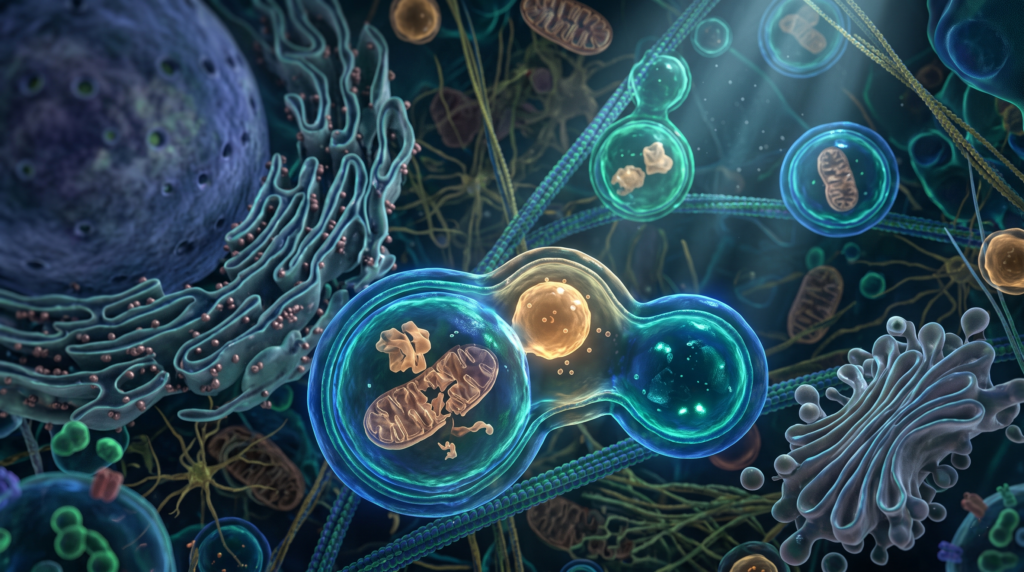
Table of Contents
What Autophagy Actually Is (Skip the Metaphors for a Second)
Autophagy — from the Greek for “self-eating” — is a degradation pathway. Cells identify damaged organelles, misfolded proteins, and other debris, wrap them in a double-membrane structure called an autophagosome, and ship them to the lysosome for breakdown. The salvaged materials — amino acids, fatty acids, simple sugars — get reused to build new cellular components.
Three mechanisms fall under the autophagy umbrella: macroautophagy (the dominant form, and what most fasting content refers to), microautophagy, and chaperone-mediated autophagy. When people talk about “activating autophagy,” they mean macroautophagy specifically.
Two switches control it:
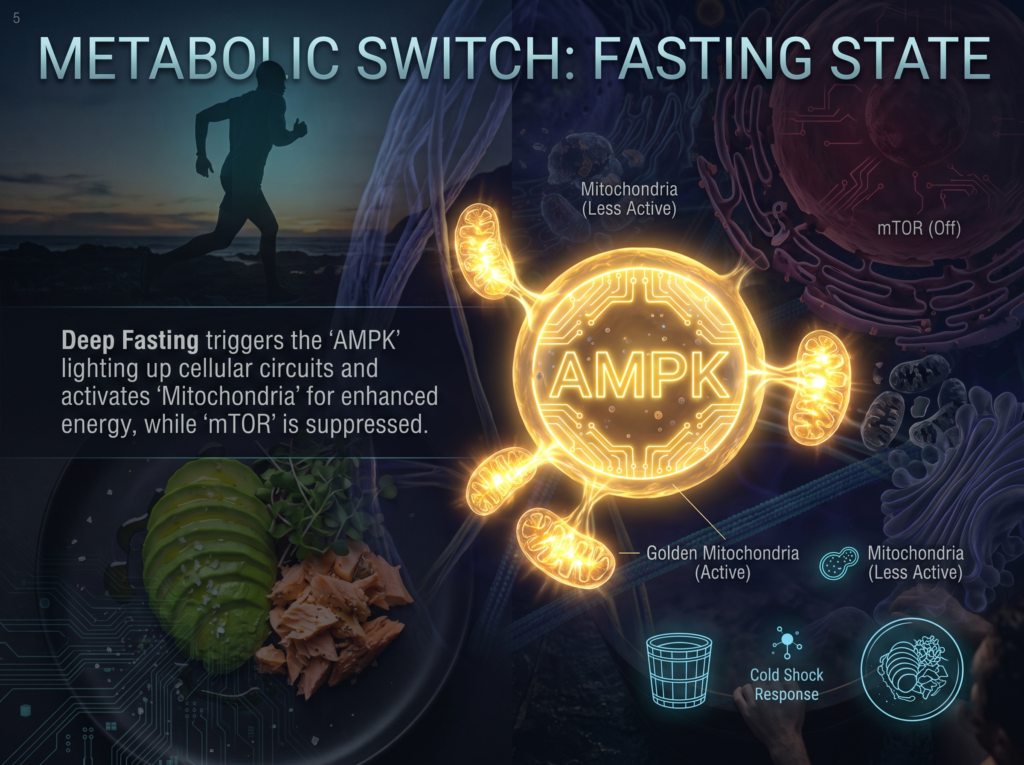
- mTOR — the growth signal. Active when you’re fed, protein and glucose are flowing, and cells are told to build and divide. High mTOR suppresses autophagy.
- AMPK — the energy sensor. Activates when cellular ATP drops, which flips mTOR off and turns autophagy on.
Fasting is one of the most reliable ways to flip that switch, alongside calorie restriction, ketogenic eating, and endurance exercise. This isn’t fringe biology — it’s well-established enough that Yoshinori Ohsumi won a Nobel Prize in 2016 for mapping out the genetics behind it.
Autophagy runs at a low level constantly, ramps up noticeably around 16–24 hours of fasting, and reaches its most studied "peak window" between 24 and 72 hours — but the actual human data on timing is thinner than most fasting blogs let on.
Beyond Fasting: Other Ways to Support Autophagy
Fasting isn’t the only lever that pulls on this pathway. If a multi-day protocol isn’t accessible right now — or isn’t appropriate for you — a few other inputs are associated with the same AMPK/mTOR shift, in varying degrees:
- Endurance exercise. Sustained aerobic activity — running, cycling, swimming — creates a comparable energy-deficit signal directly in muscle tissue, independent of food intake.
- A ketogenic or low-carb diet. Shifting your primary fuel source away from glucose mimics part of the fasted metabolic state without requiring zero caloric intake.
- Cold exposure. Brief, controlled cold stress is being studied as a mild autophagy-related trigger, though the human evidence here is considerably thinner than for fasting or exercise.
- Specific dietary compounds. Resveratrol (found in grapes) and spermidine (found in aged cheese, mushrooms, and other fermented foods) are both under active research for autophagy-supporting effects — neither is established at the same evidence level as fasting itself.
None of these replace the metabolic depth of a genuine multi-day fast. But they matter for a real reason: the people who most need to avoid extended fasting outright — pregnancy, eating disorder history, chronic illness — are often the same people looking for a gentler way to support the same pathway. This is that option.
The Extended Fasting Autophagy Protocol: An Hour-by-Hour Breakdown
Autophagy doesn’t switch on like a light. It’s closer to a dimmer that gradually turns up as your metabolic state shifts. Here’s the general progression most researchers and clinicians describe, based on animal studies and the limited human data available.
| Fasting Window | Metabolic State | What’s Happening |
|---|---|---|
| 0–12 hours | Fed → transitional | Digesting last meal, burning glycogen |
| 12–16 hours | Glycogen depletion | Insulin drops, early autophagy signaling begins |
| 16–24 hours | Ketosis onset | AMPK rises, mTOR suppressed, autophagy accelerates |
| 24–36 hours | Autophagy peak time (early) | Deeper cellular cleanup, ketone production climbing |
| 36–48 hours | Deep autophagy | Substantial protein and organelle turnover |
| 48–72 hours | Sustained peak | Immune cell turnover begins alongside autophagy |
| 72+ hours | Extended state | Continued benefit, but rising physiological risk |
12–16 Hours: The Metabolic On-Ramp
Nothing dramatic yet. Your liver is working through stored glycogen, insulin is falling, and the body is starting to lean on fat for fuel. Most 16:8 intermittent fasters live in this window daily — useful for metabolic flexibility, but not where the deep cellular repair fasting schedule really kicks in.
24 Hours: Autophagy Peak Time Begins
This is where things change. Glycogen stores are largely spent, glucagon rises, and AMPK activation starts driving real autophagic flux. Research on short-term fasting in animal models — including work on hepatic tissue and neuronal cells — found autophagosome formation increasing within the first 24 hours and continuing to climb from there, alongside signs of reduced mTOR signaling that supported the shift.
36 Hour Fast Benefits: An Underrated Middle Ground
The 36 hour fast autophagy benefits get less attention than the 24-hour or 72-hour marks, but this window matters. You’re past the early ketosis discomfort, deep enough into fat metabolism for stable ketone production, and autophagic activity is well underway — without the additional physiological load of a third full day without food. For many people newer to extended fasting, 36 hours is a more realistic entry point than jumping straight to 72.
48 Hour Fasting Benefits: Deep Cellular Renewal
By 48 hours, insulin is at its lowest point, ketones are climbing, and autophagic turnover of damaged proteins and mitochondria is substantial. This is also roughly where some of the immune-related changes associated with longer fasts start to emerge — a topic still being actively studied rather than settled science.
Beyond 72 Hours: Diminishing Returns, Rising Risk
Autophagy doesn’t stop at 72 hours. But the risk-to-reward curve bends. Electrolyte depletion, muscle protein breakdown, and refeeding complications become more likely the longer a fast runs. Any protocol extending past 72 hours belongs under medical supervision from a qualified healthcare provider, not a self-directed experiment.
Measuring Where You Actually Are: The Glucose-Ketone Index
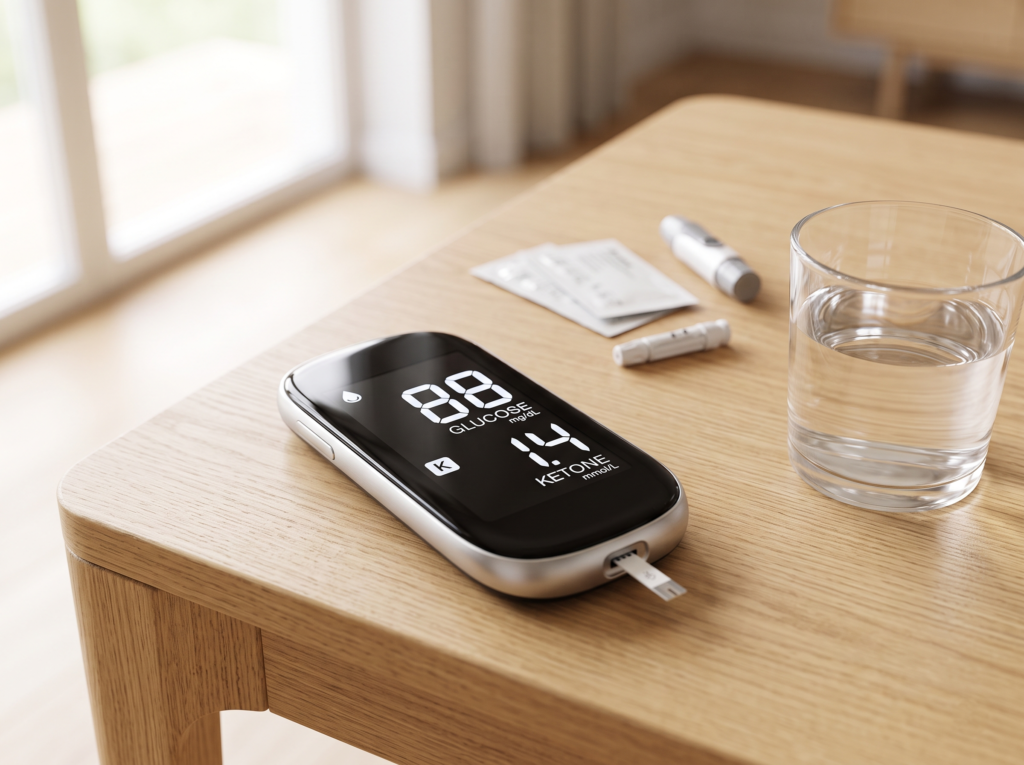
You can’t watch autophagy happen in real time, but you can track the metabolic environment that drives it. That’s what the Glucose-Ketone Index (GKI) is for — a single number, calculated from a home blood glucose and ketone meter, that tells you roughly how deep into the fasted state your body has shifted.
Formula: (Blood glucose in mg/dL ÷ 18) ÷ Blood ketones in mmol/L = GKI
(If your meter already reads glucose in mmol/L, skip the division by 18 and calculate directly.)
A lower score means deeper ketosis — and, by extension, a metabolic environment more consistent with sustained autophagic activity. The metric itself comes out of therapeutic ketogenic research originally developed for metabolic and oncology applications, now widely borrowed by the extended-fasting community as a rough proxy for progress.
| GKI Score | Metabolic State | Rough Autophagy Signal |
|---|---|---|
| Above 9 | No ketosis | Baseline only |
| 6–9 | Mild ketosis | Low |
| 3–6 | Moderate ketosis | Moderate — fat-burning active |
| 1–3 | High therapeutic ketosis | High — the range most extended fasters target by day two or three |
| Below 1 | Peak therapeutic ketosis | Maximum — typically only seen in medically supervised, prolonged fasts |
A practical target for a 48–72 hour fast is a GKI between 1 and 3 by the second day. Worth flagging: GKI tells you about your ketone/glucose ratio, not autophagy directly — it’s a proxy, not a measurement of autophagic flux itself, and should be read that way rather than as a precise biomarker.
What the Human Research Actually Shows
Here’s the part most extended-fasting content glosses over: the hour-by-hour timeline above is built largely on animal studies — flies, worms, and mice. Human data confirming the exact autophagy peak hours is still limited.
Researchers have flagged this gap directly. Studies have established that autophagy activity declines with age in simpler organisms, and that restoring it — through caloric restriction or genetic manipulation — can extend healthspan in those models. Whether the same holds true in humans, and at what fasting duration autophagy reliably activates in people rather than mice, remains an open question actively being investigated through tissue sampling (adipose and blood cells) in current research protocols. In other words: the biological mechanism is real and well-mapped in cell biology. The precise human timeline is still being filled in.
That distinction matters. It doesn’t invalidate fasting as a strategy — it just means claims about exact hour markers should be read as reasonable estimates extrapolated from animal data, not settled human fact. The NIH’s research summaries on autophagy and aging are a good place to track this as more human trials publish results.
Signs of Autophagy During an Extended Fast
There’s no home test for autophagic flux — you can’t watch your cells clean house in real time. But several downstream signs tend to cluster around the same windows described above:
- Reduced hunger after the first 24–36 hours, as ketones stabilize appetite-regulating hormones
- Mental clarity or a “flat but focused” feeling, often reported starting day two
- Stable energy without the blood sugar swings typical of a normal eating day
- Bad breath (acetone-like), a byproduct of ketosis rather than autophagy itself, but a reliable marker you’re deep in the metabolic shift
- Mild fatigue alongside the clarity — not a contradiction, just two things that can coexist during a prolonged fast
None of these are diagnostic. They’re correlated with the metabolic state that also drives autophagy, which is the best proxy most people have outside a research lab.
A Longer Fast, and What It Actually Looked Like
Extended fasting protocols this long aren’t something most people attempt, and they’re not something to jump into casually — but real-world accounts are worth including precisely because they show what happens outside a controlled study.
Amisha, who has fasted at length as part of her own health routine, described her longest continuous fast — 13 days — this way: the benefits didn’t taper off as the days went on. Smaller changes showed up first: skin tags fell off, some scars faded. Then older injuries surfaced. An old injury that had required surgery, one that used to ache whenever barometric pressure shifted, flared up sharply around day eight — intense pain, similar to the original injury. Then it subsided. Six years later, she says, it hasn’t ached since.
She also flagged the downside of that same intensity. Her gut lining healed so noticeably that four autoimmune issues and several food allergies seemed to disappear. She read that as permission to reintroduce the foods she used to react to. Four to six months later, the allergies and autoimmune symptoms came back, and she had to eliminate those foods again.
That second half of the story matters as much as the first. Resolved symptoms during or after an extended fast don’t necessarily mean a condition is gone for good — they can mean the underlying trigger is temporarily suppressed, not eliminated. Treating a fast-induced remission as a permanent fix, without reintroducing trigger foods carefully or confirming with a clinician, is a common and avoidable misstep.
➟ Stop Lymphatic Drainage Pregnancy Massage Until You Know These 4 Shocking Facts
Building an Extended Fasting Protocol Safely
A serious cellular repair protocol isn’t just “don’t eat for X hours.” Preparation and refeeding matter as much as the fast itself.
Before You Start
- Taper carbohydrates and processed food 2–3 days out to ease the metabolic transition
- Reduce caffeine gradually rather than stopping cold — withdrawal headaches are avoidable
- Prioritize a nutrient-dense (not oversized) final meal — a huge “last supper” spikes insulin and makes the first 24 hours harder, not easier
- Plan around a low-demand stretch of your schedule, not a high-stress work week
During the Fast
- Electrolytes are non-negotiable. Falling insulin triggers sodium loss through the kidneys, which drags potassium and magnesium out of balance with it. Plain water without electrolytes can make symptoms worse, not better.
- Sip water consistently rather than in large volumes at once
- Keep activity light — walking or gentle stretching, not high-intensity training
- Track how you feel, not just the clock. Dizziness, chest discomfort, or severe confusion are signals to stop, not push through
Breaking the Fast
Refeeding is where a lot of the benefit gets undone if it’s rushed. Start with something gentle — bone broth, a small portion of well-cooked vegetables — before working back up to normal meals over 24–48 hours. A heavy, high-fat, or high-sugar first meal after an extended fast is a common cause of digestive distress and can blunt the metabolic gains of the fast itself.
Who Should Not Attempt an Extended Fasting Protocol
This isn’t a universal tool, and pretending otherwise does readers a disservice. Extended fasting — anything beyond roughly 24 hours — should be avoided or only attempted under direct medical supervision by:
- Anyone pregnant or breastfeeding
- People with type 1 diabetes or on insulin/blood-sugar-lowering medication
- Anyone with a current or past eating disorder
- Individuals who are underweight or malnourished
- People with significant kidney, liver, or heart disease
- Anyone over 65, or managing chronic illness, without clearance from a physician
The NHS guidance on fasting and health and a conversation with your own doctor should come before any multi-day protocol — not after you’ve already started one.
Autophagy Activation Protocol: A Realistic Starting Point
If the goal is triggering meaningful autophagy without diving into a multi-day fast, a graduated approach tends to work better than an all-or-nothing 72-hour attempt:
- Weeks 1–2: Establish a consistent 16:8 time-restricted eating window
- Weeks 3–4: Extend to one 24-hour fast per week
- Month 2: Attempt a single 36-hour fast, with electrolytes and a planned refeed
- Month 3+: Consider a 48-hour fast only after the above have gone smoothly, ideally with medical check-in
This staged approach lines up with how most extended fasting guidelines from clinical sources are framed — building tolerance rather than starting at the deep end.
The Bottom Line
The science behind an extended fasting autophagy protocol is real, mechanistically well-understood at the cellular level, and still being mapped out precisely in humans. The hour-by-hour windows — 16 hours for early signaling, 24 hours for acceleration, 36 to 72 hours for deeper turnover — are the best current estimate, built mostly from animal research with human confirmation still catching up.
What’s not in question is that preparation, electrolyte management, and a slow refeed matter as much as the fast itself, and that extended protocols carry real contraindications for a meaningful share of the population. Treat longer fasts as a serious physiological intervention, not a wellness trend — plan accordingly, and loop in a healthcare provider before pushing past the 24-hour mark.
This article is for informational and educational purposes only and is not a substitute for professional medical advice, diagnosis, or treatment. Always consult your doctor or a qualified health provider before starting any new diet, exercise, or wellness routine.
Frequently Asked Question (FAQs):
Q1. How many hours until autophagy starts?
Early autophagic signaling appears to begin somewhere in the 16–24 hour range, based on the metabolic shifts documented in fasting research, with more substantial activity building from 24 hours onward.
Q2. Is a 36-hour fast enough, or do I need 48–72 hours?
A 36-hour fast sits in a genuinely useful middle zone — deep enough for meaningful autophagic activity without the added physiological load of a third day fasting. Whether 48 or 72 hours adds meaningfully more benefit for a given individual isn’t fully settled in human research yet.
Q3. Can I exercise during an extended fast?
Light movement is generally fine. Intense training, especially past 24 hours into a fast, raises the risk of dizziness and injury and isn’t necessary to get autophagic benefits.
Q4. Does coffee break a fast?
Light movement is generally fine. Intense training, especially past 24 hours into a fast, raises the risk of dizziness and injury and isn’t necessary to get autophagic benefits.

Lyra
Biohacking & Human Performance Writer
Lyra explores human optimization, cellular health, protocols, and data-backed performance habits.
More in Biohacking

Infrared Sauna vs Traditional Sauna: Don’t Waste 1 Minute on the Wrong Choice
Discover Infrared Sauna vs Traditional Sauna for muscle recovery and longevity. Compare…

Stop Lymphatic Drainage Pregnancy Massage Until You Know These 4 Shocking Facts
Somewhere around week 28, a lot of women stop recognising their own…

Waking Up in the Middle of the Night in Early Pregnancy: Why It Happens and What Actually Helps
Discover how lymphatic drainage pregnancy techniques relieve first-trimester insomnia, reduce fluid buildup,…

7 Proven Polyvagal Exercises for Nervous System Regulation: End Chronic Panic & Feel Safe
Logic can't talk your body down from panic. Master 7 polyvagal exercises…

8 Powerful Ways to Increase REM Sleep (Stop Waking Up Tired)
Sleeping 8 hours but still exhausted? Discover 8 science-backed ways to increase…

How to Fix Sleeping Posture: 4 Proven Ways to Stop Morning Neck Pain
Learn how to fix sleeping posture with 4 research-backed rules. Discover the…

Stop Waking Up Exhausted: 7 Proven Ways to Increase Deep Sleep and REM Sleep Naturally
Sleeping 8 hours but still waking up tired? Discover science-backed habits, foods,…

Don’t Ignore These 9 Warning Early Perimenopause Symptoms in 30s
Struggling with irregular cycles or fatigue? Don't ignore these early perimenopause symptoms…